
Maranello and Sant'Agata Bolognese sit barely half an hour apart on the flat, fog-prone plain between Modena and Bologna. You can drive from one factory gate to the other in the time it takes to listen to an album. Yet the two companies behind those gates have spent sixty years defining themselves as opposites — one a black horse rearing on a field of canary yellow, the other a gold bull crouched on a black shield, head lowered, about to charge.
The rivalry is real, but it is not symmetrical. Ferrari was a racing team that reluctantly learned to sell road cars. Lamborghini was a road car company built by a man who refused, on principle, to go racing at all. Everything that follows — the badges, the engines, the price lists, the share price — flows from that single divergence.
The argument that may never have happened
The founding myth is compact enough to fit on a poster. Around 1963, Ferruccio Lamborghini, already rich from tractors, owned a Ferrari 250 GT. He was irritated by its clutch, which he found weak and prone to failure. Being a manufacturer himself, he took the problem apart, allegedly discovered that the clutch was a component he already bought for his own tractors, and drove to Maranello to tell Enzo Ferrari about it.
Enzo, in the version everybody repeats, refused to see him properly, or saw him and told him that the problem was not the clutch but the driver — that a man who made tractors had no business telling him how to build sports cars. Ferruccio went home and decided to build a better one.
It is a wonderful story and it should be treated with care. The clutch argument is disputed. Much of it traces back to interviews Ferruccio gave decades later, when he had every commercial reason to enjoy the telling, and the details shift between versions: sometimes Enzo is dismissive, sometimes he simply never appears, sometimes the meeting is with an underling. Ferrari historians have long pointed out that Enzo left no corroborating account, and that Ferruccio had other, duller motives — he wanted a grand tourer that was quieter, better trimmed and less temperamental than what Maranello was selling, and he had the money to make one.
What is not disputed is the outcome. In 1963 Ferruccio Lamborghini established Automobili Lamborghini and put a factory on flat farmland at Sant'Agata Bolognese, deliberately close enough to Maranello to raid its talent and far enough to be its own thing. Whether or not the clutch conversation happened, the company exists because a man with a tractor fortune concluded he could do it better.
Ferrari began as somebody else's racing team
Enzo Ferrari's company is older than its cars by eighteen years, a fact that explains almost everything about how it behaves.
Born in Modena in February 1898, Enzo came to motorsport as a driver of moderate success and a talent scout of exceptional ability. By the 1920s he was racing for Alfa Romeo and, more importantly, was trusted by them. In 1929 he founded Scuderia Ferrari in Modena — not a manufacturer, but a racing organisation that prepared and campaigned Alfa Romeos for wealthy gentleman drivers and, before long, functioned as Alfa's works team in all but name.
For most of the 1930s the Scuderia was where Italian racing happened. It ran Tazio Nuvolari. It fielded the Alfa Romeo P3s that went up against the state-funded German teams. It employed the engineers, mechanics and logistics that Alfa itself increasingly could not be bothered to maintain in-house. Enzo Ferrari spent a decade learning how to run a racing team with other people's money, which turned out to be the most valuable apprenticeship in motoring history.
It ended badly, as these things do. Alfa Romeo brought its racing back in-house at the end of the 1930s and Enzo left in 1939 under an agreement that barred him from using the Ferrari name in competition for a period of years. He set up Auto Avio Costruzioni in Modena and, in 1940, built two eight-cylinder sports cars for the Brescia race that replaced the Mille Miglia that year — Ferraris in all but name, badged as Tipo 815.
The war intervened. The works were moved out to Maranello, where Enzo had land, and were bombed anyway. When production of cars finally began there in the late 1940s, it began under his own name at last.
The horse that belonged to a dead pilot
The Cavallino Rampante is the rarest thing in corporate identity: a logo with a documented origin that is also genuinely moving.
Francesco Baracca was Italy's leading fighter ace of the First World War, credited with more than thirty victories, and he carried a black prancing horse painted on the fuselage of his aircraft. He was killed in June 1918 over the Montello. The horse was already a piece of national iconography by the time the war ended.
Enzo Ferrari's account is that after a race win at the Savio circuit near Ravenna in the early 1920s he met Baracca's parents, and that the pilot's mother, Countess Paolina Baracca, told him he should put her son's horse on his cars for luck. Enzo did — but not immediately, and not unchanged. The Scuderia Ferrari shield first appeared in competition in the early 1930s, on Alfa Romeos.
Two additions were his own. He set the black horse on a canary yellow field, because yellow is the colour of Modena, his home city. And he added the letters S F for Scuderia Ferrari, with a band of the Italian tricolour across the top.
So the badge is a layered document: a dead airman's personal marking, the civic colour of Modena, the initials of a racing team that predated the car company, and the national flag. Almost nothing on it refers to automobiles at all.
Shield or rectangle
Ferrari has never resolved the emblem into a single form, and does not want to. Two versions run in parallel and mean different things.
The shield — the pointed-bottom crest with S F beneath the horse — is the Scuderia's mark. Strictly it belongs on the front wings, and its use on road cars is a nod to competition rather than a default. The rectangle, with the horse alone on yellow under a tricolour bar and usually the Ferrari wordmark, is the corporate badge, the one on the nose and the steering wheel boss.
Owners understand the distinction, and Ferrari polices it. The shield says racing. The rectangle says product. That the company bothers to maintain two versions of the same horse tells you how seriously it takes the difference.
Selling road cars was always the tax on racing
The 125 S of 1947 was the first car to wear the Ferrari name, and it set the template: a 1.5-litre V12 designed by Gioacchino Colombo, at a moment when most of Europe was building 1.1-litre saloons out of whatever steel it could find. Ferrari chose twelve cylinders because Enzo had wanted twelve cylinders since he was young, and because a V12 sounded like nothing else.
The road car business existed to fund the race team. Enzo said so, repeatedly and without embarrassment. Customers were not partners; they were a revenue line. The 1950s and 1960s produced a string of dual-purpose machines — the 250 series above all — that a buyer could drive to a circuit, race, and drive home, which was convenient because that is very nearly what they were designed for.
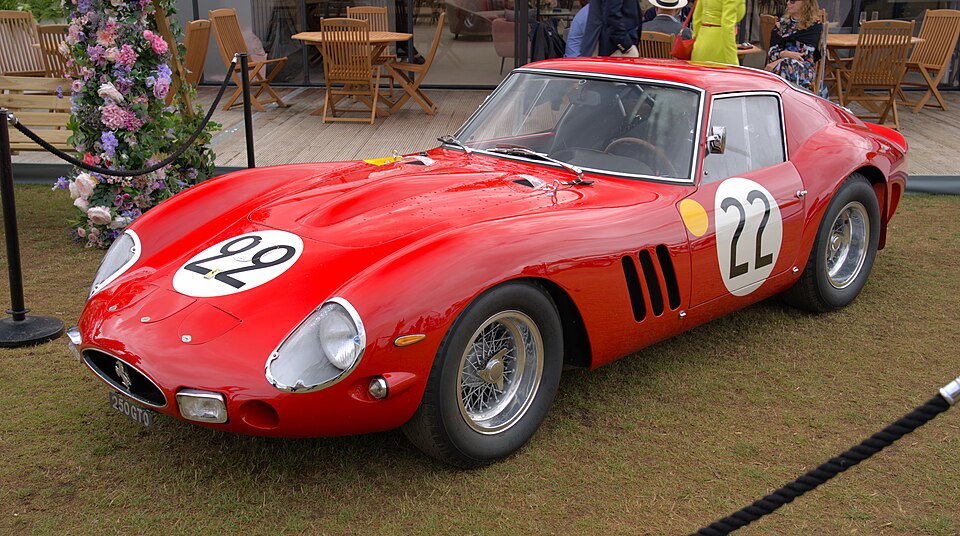
The 250 GTO of 1962 is the apotheosis of that logic and, not coincidentally, the most valuable car in the world by auction record. Roughly three dozen were built. It was homologated as a grand tourer, which required a production run Ferrari did not really complete, and it won its class at Le Mans and the world championship for makes.
Meanwhile, Ferrari had entered the first Formula One World Championship season in 1950 and has never missed one since — the only team that can say so. The first Ferrari grand prix victory came at Silverstone in 1951, when José Froilán González beat the Alfettas, cars Enzo had helped make famous. He is said to have described it as killing his own mother.
Tractors, oil burners and a very large chequebook
Ferruccio Lamborghini's fortune was not romantic, which is exactly why it worked.
Born in 1916 at Renazzo, near Cento in the same Emilian plain, he trained as a mechanic and spent the war maintaining vehicles for the Italian air force, latterly on Rhodes, where scarcity taught him to improvise. He came home to a country full of abandoned military hardware and a countryside desperate to mechanise, and in 1948 founded Lamborghini Trattori, building tractors initially from surplus parts and later from his own designs.
He was very good at it. By the late 1950s he was one of Italy's larger agricultural machinery makers, and he diversified into oil burners and heating equipment, and later air conditioning — profitable, unglamorous businesses that generated cash year-round.
This matters because it made him a different kind of founder. Enzo Ferrari built road cars to pay for racing. Ferruccio Lamborghini built road cars because he could already afford to, and he was explicit that his company would not go racing: motorsport was expensive, ruinous to reliability, and a distraction from the product. That decision, taken at the outset, is the deepest structural difference between the two firms and it echoes to this day.
Taurus, and a ranch outside Seville
The badge is a gold bull on a black shield, its head down, front hoof scraping — the posture of an animal a fraction of a second from charging.
Two threads produced it. Ferruccio was born in late April, making him a Taurus, and he took the sign seriously enough to use it as a personal symbol. And in the early 1960s he visited the ranch of Don Eduardo Miura, the celebrated Andalusian breeder of fighting bulls, near Seville. He came away with a naming convention as well as a mascot.
From then on Lamborghinis were named for bulls, bullfighting or the ring: the Miura after the breeder; Islero after the bull that killed the matador Manolete; Espada for the sword; Diablo, Murciélago, Reventón, Aventador and Huracán after individual fighting bulls; Urraco, Jalpa and Gallardo after bull breeds. The exceptions are conspicuous — Countach is Piedmontese dialect, an exclamation of astonishment reportedly blurted at Bertone when the prototype was uncovered.
Set the two badges side by side and the contrast is almost too neat. Ferrari's horse rears upward, a memorial in black and yellow with a flag on top — heraldic, patriotic, backward-looking. Lamborghini's bull crouches forward on black and gold — aggressive, commercial, entirely about what is about to happen. One badge commemorates. The other threatens.
Lamborghini's shield has been remarkably stable since the 1960s, receiving a significant tidy-up under Audi ownership in the late 1990s and, in 2024, a flattened and simplified redraw with a revised wordmark, in line with the general industry move to marks that survive being rendered 24 pixels wide on a phone.
The 350 GT: an argument made in aluminium
Ferruccio's answer to Maranello arrived fast, because he bought the best people available and let them work.
The 350 GTV prototype appeared at the Turin show in 1963, styled by Franco Scaglione, with a quad-cam V12 designed by Giotto Bizzarrini — an engineer who had been central to the Ferrari 250 GTO before departing in the internal upheaval of 1961. The story goes that Bizzarrini was paid a bonus per horsepower, and duly delivered an engine that made an enormous number of them in racing tune.
That was the problem. The prototype's engine was a competition unit dressed as a road engine, and the car was not finished. Ferruccio handed it to two very young engineers, Gian Paolo Dallara and Paolo Stanzani, with instructions to make it civilised. They detuned the V12, revised the chassis, and Carrozzeria Touring clothed it in aluminium using its Superleggera method.
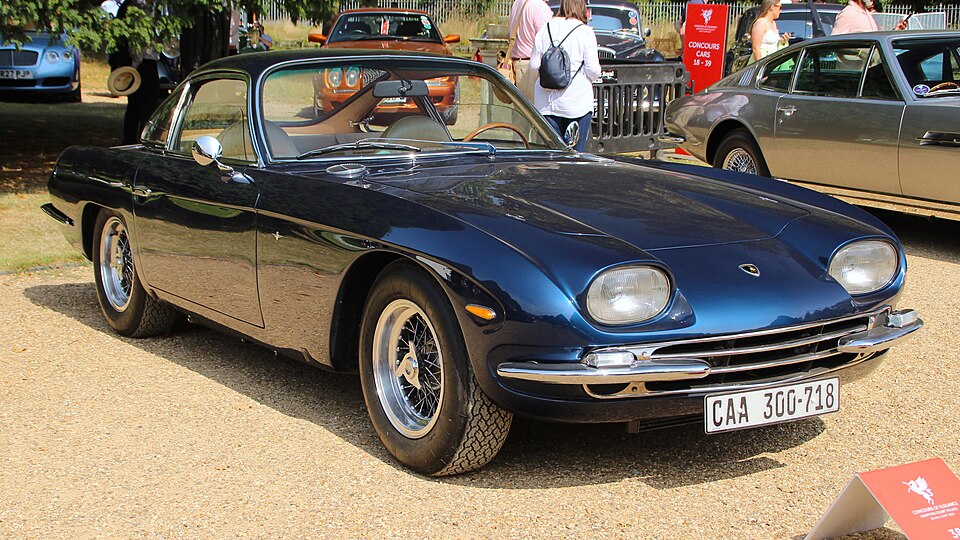
The resulting 350 GT of 1964 was quieter, better built and more comfortable than the Ferraris it competed against, with independent suspension all round at a time when Maranello was still selling live rear axles on its grand tourers. It was not faster. It did not need to be. Around 120 were built, followed by the larger-engined 400 GT, and Lamborghini had made its point: a company with no racing programme could out-engineer one that had nothing but.
1966: the year the supercar was invented
Then the young engineers went behind the boss's back.
Dallara, Stanzani and the New Zealand test driver Bob Wallace spent their own time developing a chassis that mounted the V12 transversely, behind the driver — a layout borrowed from sports-prototype racing and, before that, from the Mini's packaging logic, and one that no road car had used with a twelve-cylinder engine. Ferruccio, who had made a career of not going racing, was reportedly sceptical but let them show the bare chassis at Turin in 1965 to see what happened.
What happened was that people ordered it.
Bertone got the body, and a 27-year-old Marcello Gandini drew it. The complete Miura P400 was unveiled at Geneva in March 1966 in orange, low enough to walk over, with headlight surrounds like eyelashes and louvres over the engine bay. It is arguably the most beautiful car ever built and it was, by most accounts, somewhat terrifying above 150 mph, with front-end lift that later versions never entirely cured.
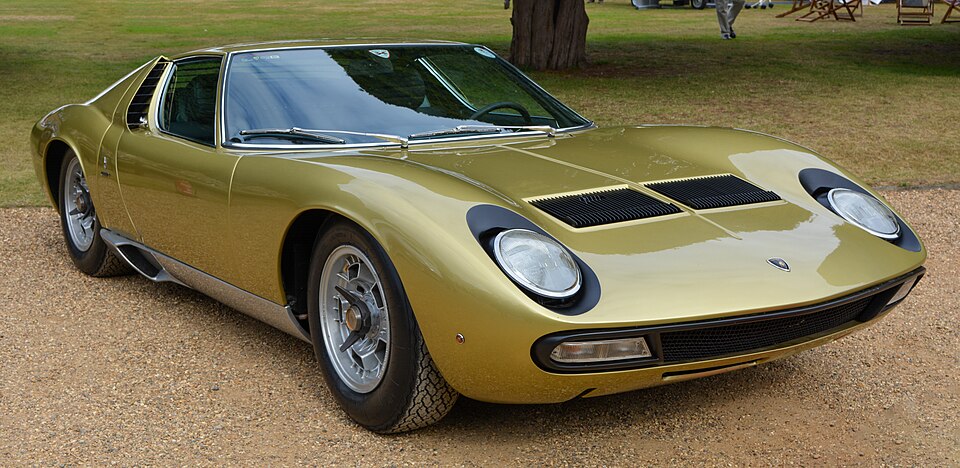
The Miura mattered because it rewrote the specification. Before it, a fast road car had its engine in front. After it, the mid-engined V12 two-seater became the definition of the class, and Ferrari — whose road cars had stayed conservatively front-engined while its racers went mid-engined — was left responding. Maranello's own mid-engined V12 flagship, the Berlinetta Boxer, did not arrive until the 1970s.
Around 760 Miuras were built across all versions. It remains the clearest single instance of the smaller company beating the larger one to the future.
The Countach and the bedroom wall
If the Miura invented the supercar, the Countach invented the supercar poster.
Gandini's follow-up appeared as the LP500 show car at Geneva in 1971 and reached production as the LP400 in 1974. It abandoned every curve the Miura had. It was a wedge — flat planes, trapezoidal intakes, a cabin pushed so far forward that reversing required opening the door and sitting on the sill. The V12 was turned longitudinally and the gearbox placed ahead of it, running between the seats, which gave the car its shift quality and its name prefix, LP for longitudinale posteriore.
And it had scissor doors, adopted because the width of the chassis sills made conventional doors impractical, which then became a Lamborghini signature that survives on the V12 cars to this day.
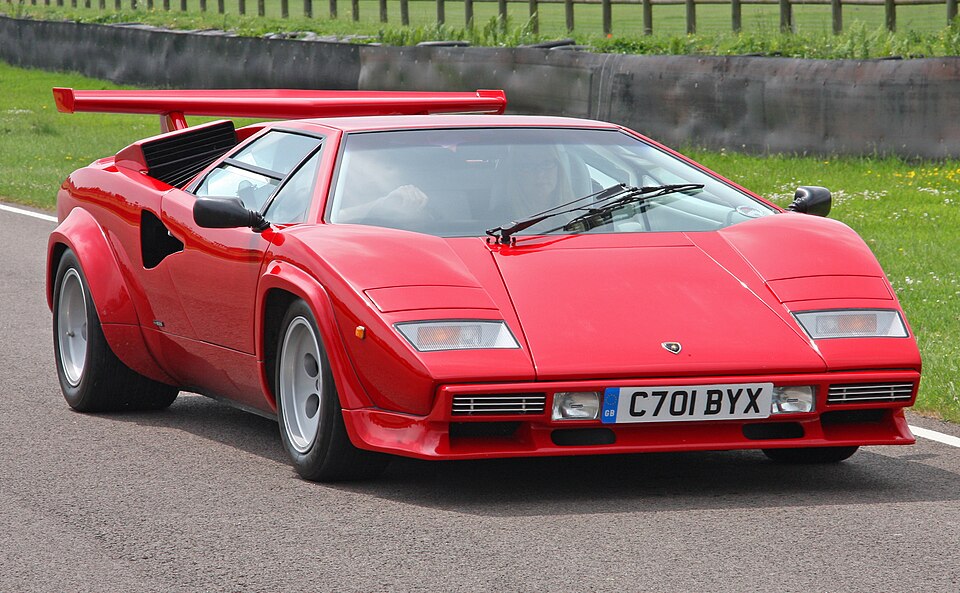
The Countach stayed in production for sixteen years, growing wings, wheel arches and, eventually, a good deal of visual clutter. It was less accomplished than the Miura and vastly more famous. For a generation of children in the 1970s and 1980s, the Countach was the fast car, and its rival on the opposite wall was usually a Ferrari.
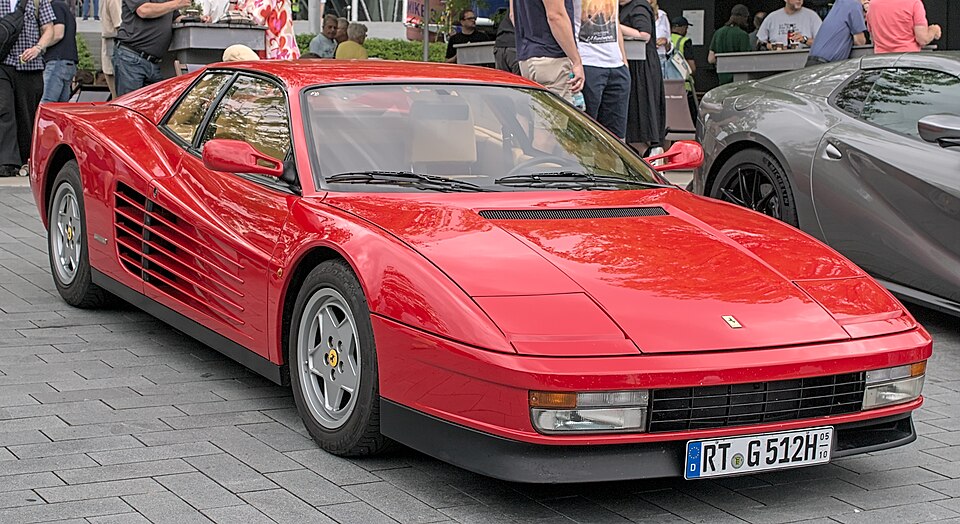
That rival was often the Testarossa of 1984 — Pininfarina's answer to the wedge, with side strakes running the length of the doors to feed the radiators that Ferrari had moved to the rear. The name revived a 1950s racing designation referring to red-painted cam covers. Where the Countach was hostile, the Testarossa was wide and theatrical, and it sold in numbers no previous Ferrari flagship had approached.
Ferrari without Enzo
The other great structural difference between the two firms is that Ferrari found a stable owner early and Lamborghini did not.
In 1969, Fiat acquired 50% of Ferrari, giving Maranello industrial backing, purchasing power and a parent that understood why the racing mattered. Enzo retained control of the competition side until his death, and the arrangement — corporate money, founder's autonomy — held for nearly two decades.
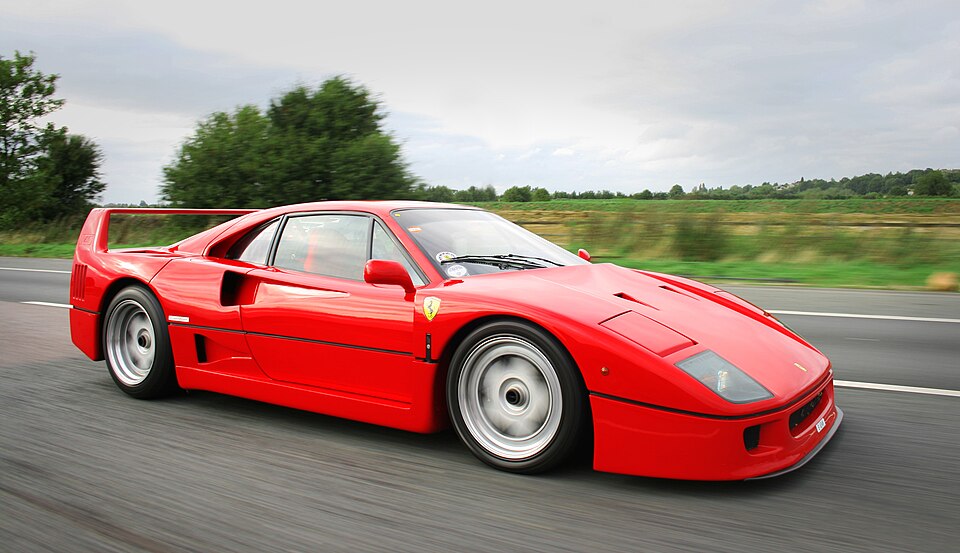
The F40 of 1987 was the last car Enzo personally signed off, built to mark forty years since the 125 S. It was deliberately brutal: a twin-turbocharged V8, a Kevlar and carbon body, sliding plastic windows, pull-cord door releases, no carpet, no anti-lock brakes, no driver assistance of any kind. Ferrari claimed a top speed above 200 mph. Around 1,300 were built against an original plan for a few hundred, because demand was extraordinary.
Enzo Ferrari died in August 1988, aged 90. Fiat raised its holding to 90%, with his son Piero Ferrari retaining 10% — a stake Piero holds still.
The company that emerged was run, from 1991, by Luca Cordero di Montezemolo, who had been Enzo's team manager during the Niki Lauda championships of the mid-1970s. Montezemolo did two things. He rebuilt product quality, which had drifted badly, and he rebuilt the Formula One team, hiring Jean Todt, Ross Brawn, Rory Byrne and, in 1996, Michael Schumacher. That group delivered five consecutive drivers' titles from 2000 to 2004 and turned Ferrari into the most commercially valuable property in motorsport.
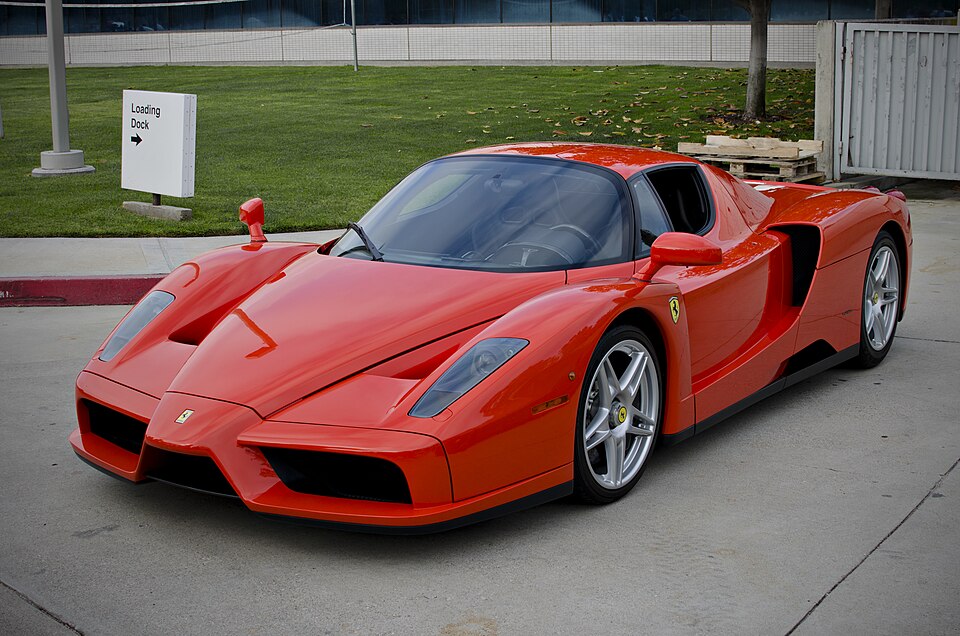
The road cars followed the racing upward. The Enzo of 2002 — F1-derived carbon tub, naturally aspirated V12, around 400 built and allocated by invitation — established the modern limited-series flagship as a distinct product category, one that Ferrari has run roughly once a decade since.
Lamborghini's lost twenty-five years
Sant'Agata, over the same period, changed hands with almost comic frequency.
Ferruccio's own troubles began in the early 1970s, and they came from the tractors rather than the cars: a large export order collapsed, Italian labour unrest disrupted production, and the cash engine that funded everything faltered. He sold a controlling share of the car company to the Swiss businessman Georges-Henri Rossetti in 1972 and the remainder to René Leimer in 1974, then retired to make wine in Umbria. The 1973 oil crisis then removed most of the market for twelve-cylinder sports cars overnight.
What followed was a carousel:
| Period | Owner | What happened |
|---|---|---|
| 1972–74 | Rossetti, then Leimer | Founder exits; oil crisis hits demand |
| Late 1970s | Court-appointed administration | Company placed in receivership after insolvency |
| 1980s | Mimran brothers | Stabilised, funded the Jalpa, Countach updates and the LM002 |
| 1987–1994 | Chrysler | Money and discipline; Diablo developed and launched |
| 1994–1998 | Indonesian-led investors | Underfunded, minimal development |
| 1998– | Audi AG (Volkswagen Group) | Restructured, invested, industrialised |
Two cars survived that chaos and are worth noting. The LM002 of 1986 was a V12-engined off-roader with a Countach engine, originally developed from military prototypes, and it is the direct ancestor of everything Lamborghini now earns its money from. And the Diablo, launched in 1990, was the Countach's replacement — Gandini's design, softened by Chrysler's studio to the designer's public irritation, and the first Lamborghini genuinely capable of more than 200 mph.
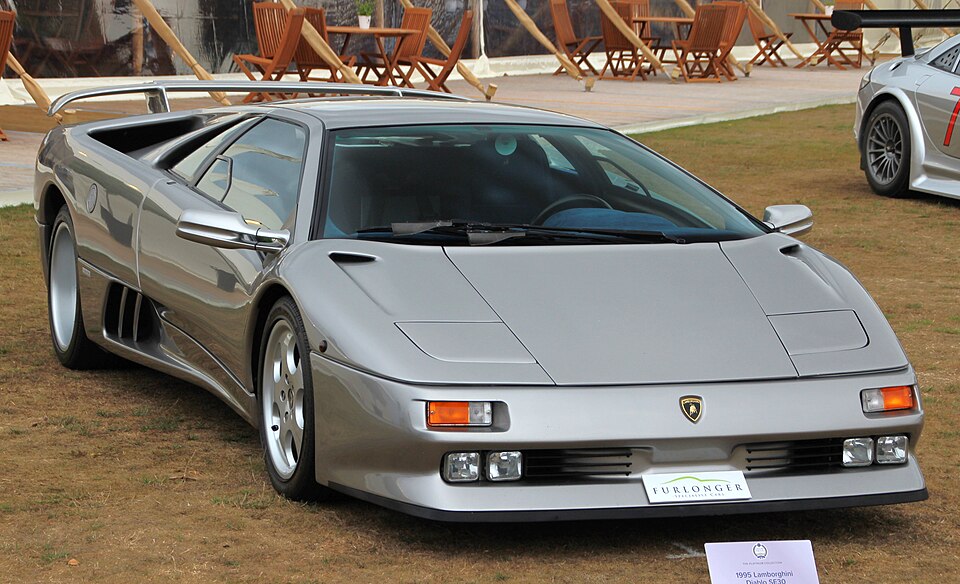
Under the Indonesian ownership of the mid-1990s the company was starved. Development slowed, quality suffered, and the Diablo soldiered on with updates it should not have had to carry alone.
What Audi actually fixed in 1998
Volkswagen Group's acquisition of Lamborghini in 1998, placing it under Audi, is usually described as a rescue. It was more than that; it was a change of species.
Audi brought three things Sant'Agata had never had for long. Capital, which meant new models could be developed on a schedule rather than when cash allowed. Process — supplier management, quality control, crash and emissions engineering, the unglamorous industrial discipline of a large German manufacturer. And a platform partner, initially through Audi and later through shared architecture with Porsche.
The results arrived quickly. The Murciélago of 2001 was the first all-new Lamborghini in over a decade, and the first that a customer could reasonably use in the rain. The Gallardo of 2003 was the more consequential car: a V10, smaller and cheaper, sharing engineering with Audi, and built in numbers that dwarfed anything the company had attempted — over 14,000 across roughly a decade, more than every previous Lamborghini combined.
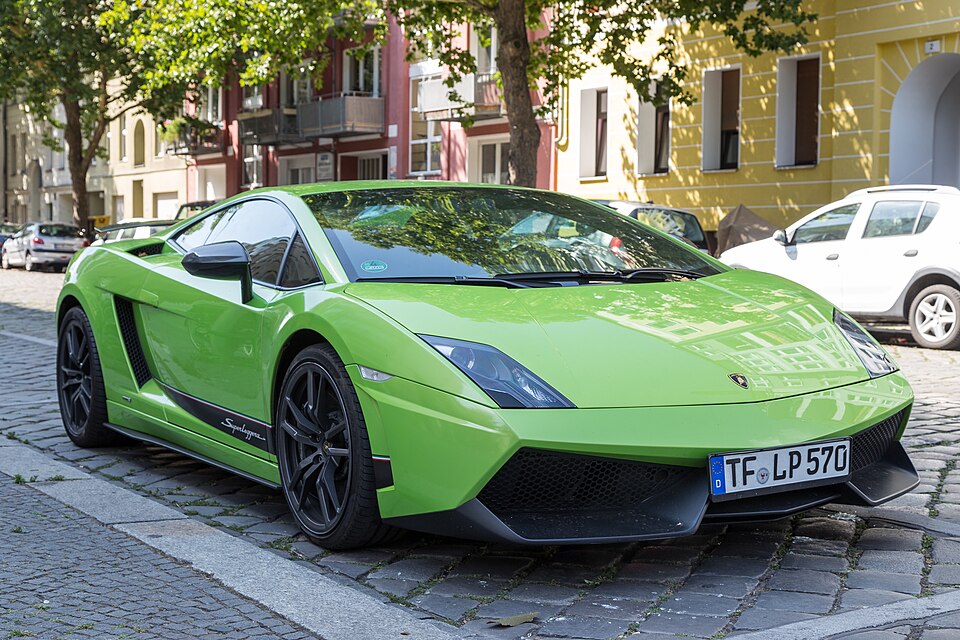
The Aventador followed in 2011 with a new V12 and a carbon-fibre monocoque, and the Huracán replaced the Gallardo in 2014 with a further-developed V10 and a considerably better interior.
The V10 remained naturally aspirated for its entire life, which by the 2020s made it a rarity. Lamborghini's engineers argued, plausibly, that the noise and the throttle response were the product.
Then came the SUVs
The single largest divergence in the modern era is what each company did about the sport utility vehicle.
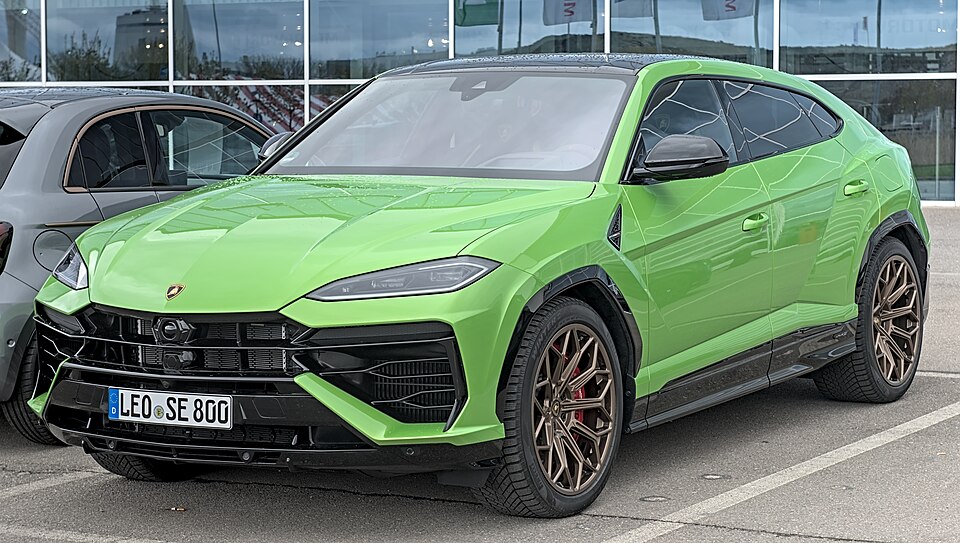
Lamborghini launched the Urus in 2018, on Volkswagen Group's large SUV platform shared with the Audi Q7, Bentley Bentayga and Porsche Cayenne, with a twin-turbocharged V8. It was immediately and overwhelmingly the company's best-seller, and it roughly doubled the size of the business. Lamborghini passed 10,000 cars a year for the first time in the early 2020s, and the majority of them were Urus.
Ferrari waited, insisted for years that it would never build an SUV, and then in 2022 revealed the Purosangue — four doors, rear-hinged rear doors, four seats only, and a naturally aspirated V12 mounted behind the front axle. Maranello declined to call it an SUV at all.
Crucially, Ferrari also capped it. The company signalled that the Purosangue would be held to a limited share of total production rather than allowed to dominate the mix. Lamborghini let the Urus run; Ferrari put a ceiling on its own.
That is scarcity as a strategy, and it is the core of Ferrari's modern financial identity. The company builds somewhere in the region of 13,000 to 14,000 cars a year — a rounding error next to a mainstream manufacturer — and manages allocation, waiting lists and eligibility for limited series with considerable deliberation. The frequently quoted Enzo-era principle was to always build one car fewer than the market wants.
Ferrari listed on the New York Stock Exchange in October 2015 under the ticker RACE and was fully separated from Fiat Chrysler in early 2016. It has since been valued by the market not as a car maker but as a luxury goods house, at multiples closer to a Swiss watch or fashion group than to an automotive one, and its valuation has at times exceeded that of manufacturers building a hundred times as many vehicles.
Lamborghini remains wholly owned within the Volkswagen Group and does not have a share price of its own. Its role is to earn a very high margin on around ten thousand cars and to lend performance credibility to the group — a different job, done well.
Formula One, and the absence of it
Ferrari has competed in every Formula One World Championship season since 1950. No other team is close. The road car company exists, historically and emotionally, as the commercial arm of that programme, and Ferrari's marketing, model naming (F40, F50, SF90, F80) and even its two-badge system all point back at the racing.
Lamborghini has never entered Formula One as a constructor. It did build V12 engines for the sport between roughly 1989 and 1993, supplying several teams — Larrousse, Lotus, Ligier and Minardi among them — and in 1991 a Lamborghini-engined chassis raced under the Modena Team banner. The engines were competent and occasionally quick; the programme was undercapitalised and ended without a win.
The company's modern racing is deliberately customer-focused: Squadra Corse's one-make Super Trofeo series and its Huracán GT3 programme, which has been genuinely successful in endurance racing, plus a prototype entry into the top class of sports car racing with the SC63 in 2024. Successful, professional, and entirely unlike Ferrari's relationship with competition, which is existential rather than commercial.
This is not an accident of history. It is Ferruccio's founding rule, still holding sixty years later.
The hybrid V12 problem, solved twice
Both companies now face the same engineering constraint — emissions regulation makes a large naturally aspirated engine hard to justify — and they have answered it in characteristically different ways.
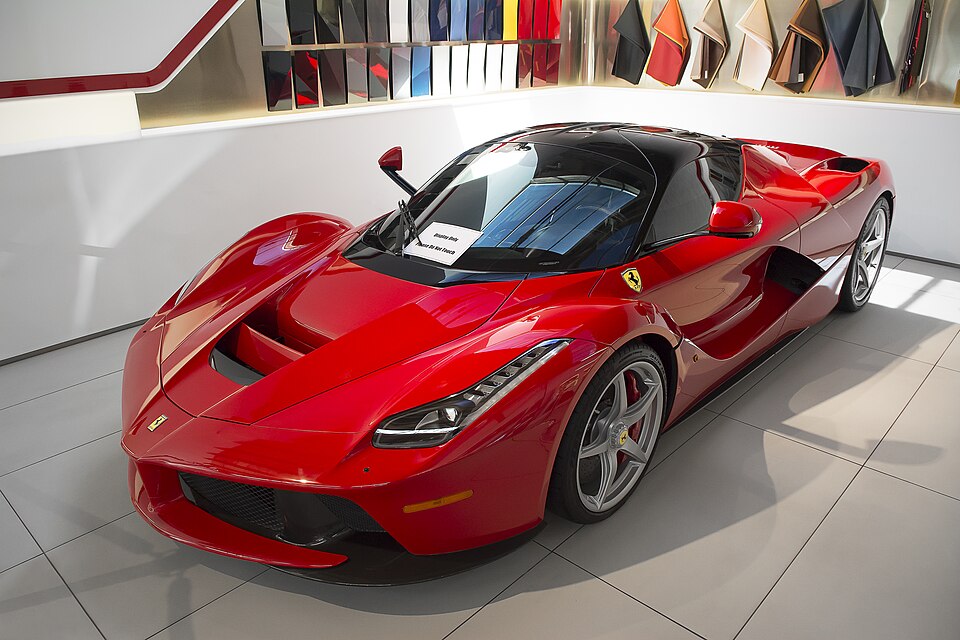
Ferrari went hybrid first and went hybrid with the halo car. The LaFerrari of 2013 paired a 6.3-litre naturally aspirated V12 with a KERS-derived electric motor, delivering combined output around 950 hp, with no electric-only running: the battery existed to fill torque gaps, exactly as in Formula One.
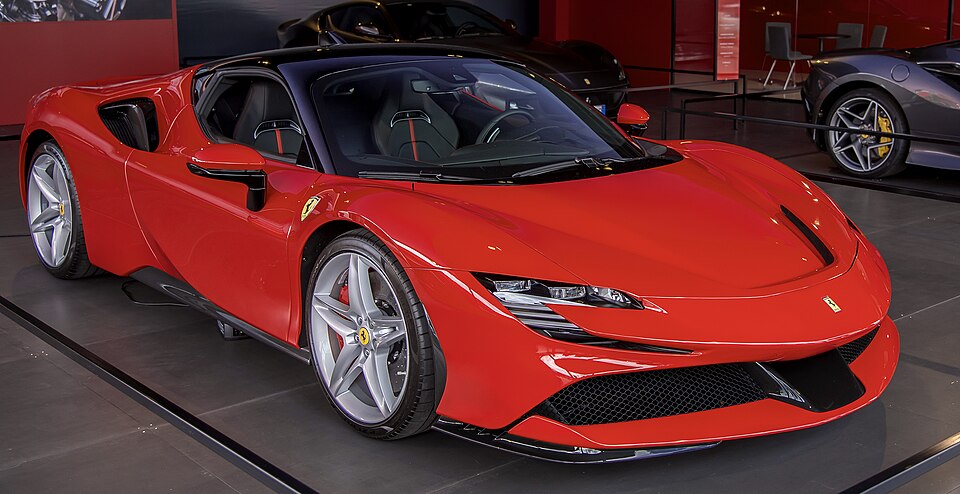
The SF90 Stradale of 2019 took the technology into the series range: a twin-turbo V8, three electric motors, two of them driving the front wheels, all-wheel drive, plug-in capability and a short electric-only range. It was the first Ferrari road car to reach roughly 1,000 hp, and it made the flagship a hybrid rather than a V12.
Ferrari then extended the logic downward with the 296 family in 2021, using a plug-in hybrid V6 in a car that sits below the flagship, and upward with the F80 in 2024 — the sixth in the Enzo/LaFerrari limited-series lineage, and pointedly not a V12. The F80 uses a heavily boosted V6 with electric assistance and turbo technology derived from Ferrari's Le Mans Hypercar programme, a choice that annoyed a portion of the customer base and was defended by Maranello on the grounds that the V6 is what its racing cars now use.
Lamborghini went the other way. The Revuelto of 2023 kept the V12 — a new 6.5-litre naturally aspirated unit revving beyond 9,000 rpm — and added three electric motors and a plug-in battery around it, for combined output of roughly 1,000 hp. The gearbox moved behind the engine, the battery went into the transmission tunnel, and the front axle became electric-only.
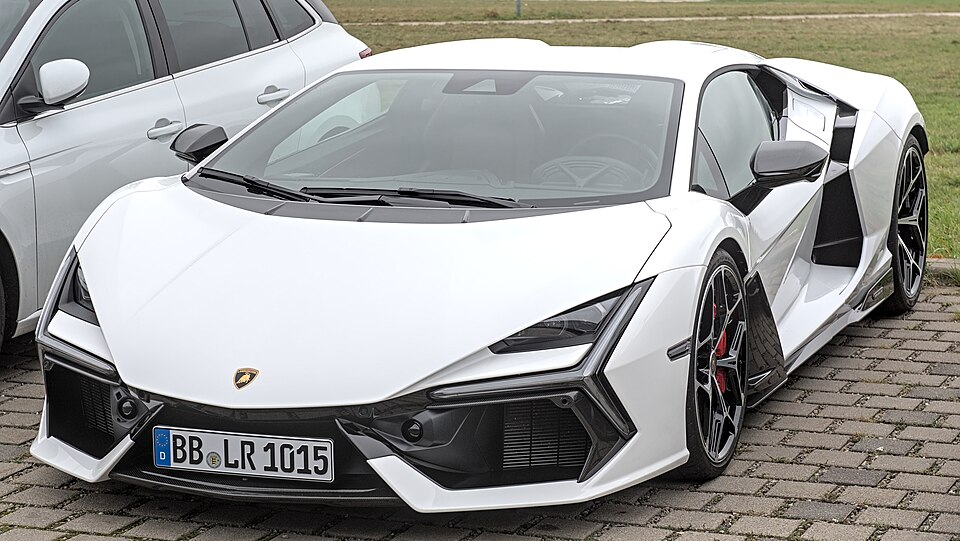
The message was explicit: Lamborghini electrified in order to keep the twelve-cylinder engine, at a moment when Ferrari's own halo car had given it up. Sant'Agata followed with the Temerario in 2024, replacing the Huracán with a high-revving twin-turbo V8 hybrid, and has kept the Urus in the range as a plug-in hybrid.
Two companies, two theories of value
| Ferrari | Lamborghini | |
|---|---|---|
| Founded | Scuderia 1929; cars from 1947 | 1963 |
| Home | Maranello | Sant'Agata Bolognese |
| Badge | Black prancing horse, Modena yellow, tricolour | Gold fighting bull on black shield |
| Badge source | Francesco Baracca's aircraft marking | Taurus and the Miura fighting-bull ranch |
| Origin of funds | Racing, then customers | Tractors, burners, air conditioning |
| Ownership | Fiat from 1969; NYSE-listed since 2015 | Six changes of hands; Audi/VW Group since 1998 |
| Formula One | Every season since 1950 | Never as a constructor; engine supplier 1989–93 |
| Flagship engine today | Hybrid V6 (F80) and hybrid V8 (SF90) | Hybrid naturally aspirated V12 (Revuelto) |
| Volume strategy | Capped, allocated, waiting lists | Volume growth led by the Urus |
| Annual output | Roughly 13,000–14,000 | Roughly 10,000+ |
Look at that table for a moment and the rivalry stops being about which car is faster.
Ferrari sells access. Its scarcity is engineered, its customer relationships are managed over decades, and the resale market it curates is part of the product. The badge works as a mark of admission, which is why the shield is guarded and why the racing must continue regardless of results — the moment Ferrari stops being a racing team, the yellow rectangle becomes just a nice logo on a fast car.
Lamborghini sells impact. It has never needed permission from a results sheet, because Ferruccio removed racing from the equation on day one. The bull's job is to be recognised instantly at a distance, and the company's most successful product is a two-and-a-half-tonne SUV that no purist asked for and everybody bought.
What to look for the next time you see one
The next time a Ferrari passes you, check which badge it is wearing on the front wing. If it is the pointed shield with S F beneath the horse, you are looking at a mark that began life on an Alfa Romeo in the 1930s, borrowed from a fighter pilot killed in 1918, on a field of yellow chosen because a man from Modena was proud of it. If it is the plain rectangle, you are looking at the corporate badge — the one that pays for the other.
And the next time you see a Lamborghini, look at the bull's front hoof. It is not standing. It is pawing the ground before the charge — a company founded on the premise that you do not need to win races to be taken seriously, which then spent sixty years proving it by never entering one.
Then ask yourself which strategy you would rather have owned since 1963: the one that put a horse on a shield and made the badge conditional on continuing to race, or the one that put a bull on a shield and refused the whole argument. Both are still here. Only one of them had to be rescued five times to get this far.


