
In 1972 the factories of the United Kingdom built roughly 1.9 million cars, an all-time record, and the badges on their bonnets read Austin, Morris, Triumph, Rover, Riley, Wolseley, MG, Jaguar, Hillman, Humber, Singer, Sunbeam, Vauxhall and Ford. Thirty-three years later, on 8 April 2005, MG Rover's administrators walked into Longbridge and stopped the line. It was the last volume car company in British ownership, and when it died there was no successor. Britain still makes cars — a great many of them — but the names on the grilles belong to Munich, Wolfsburg, Mumbai, Hangzhou, Shanghai and Amsterdam.
That is the strange arithmetic of the British motor industry. The country that gave the world the Mini, the E-Type, the Land Rover and the Formula 1 constructor lost control of virtually every mass-market brand it created, and yet builds more engines today than it did at its supposed peak. This is the story of 65 marques: who they were, what they made, and where they went.
An industry born fragmented
Britain's motor industry began wrong, and never quite recovered. Where America consolidated early around a handful of giants in Detroit and Germany's makers were disciplined by engineering culture and, later, by catastrophe and reconstruction, Britain accumulated car companies the way it accumulated regiments — locally, proudly and in absurd numbers.
Daimler began building cars in Coventry in 1896 under licence from Gottlieb Daimler, making it the country's oldest marque. Lanchester, founded by the brilliant and prickly Frederick Lanchester, produced what many consider the first genuinely all-British car in the mid-1890s, complete with an engineering logic that owed nothing to horse-drawn carriages. Napier, Star, Crossley, Clyno, Bean, Jowett, Alvis, Riley, Rover, Wolseley and Standard all followed. By the 1920s there were close to a hundred British companies making cars, most of them tiny, most of them undercapitalised, and nearly all of them clustered in a triangle bounded by Coventry, Birmingham and Oxford.
Two men imposed order on the chaos. Herbert Austin, who had built cars for Wolseley before setting up on his own at Longbridge in 1905, launched the Austin Seven in 1922 — a real car in miniature, cheap enough to kill the cyclecar trade outright and licensed abroad to become the first BMW and, in America, the American Austin. William Morris, later Lord Nuffield, started assembling Morris Oxfords in Oxford in 1913 and applied Ford's logic without Ford's vertical integration, buying in components and slashing prices until Morris took the largest slice of the British market.
By the 1930s the "Big Six" — Austin, Morris, Ford of Britain, Vauxhall, Rootes and Standard — took the overwhelming majority of production. But the tail never went away. Britain kept dozens of specialist and coachbuilt marques alive: Alvis and Armstrong Siddeley in Coventry, Lagonda and Invicta chasing Bentley, Frazer Nash importing engineering ideas from Germany, Squire and Railton selling glamour on borrowed running gear.
The Rootes Group: an empire assembled from Coventry
The Rootes brothers, Billy and Reggie, were car salesmen before they were manufacturers, and they built their group by acquisition. Humber and Hillman came first in the late 1920s, then Sunbeam and the historic Talbot name in the mid-1930s, and finally Singer in 1956.
Rootes ran its marques as a rigid hierarchy. Hillman sold the volume cars — the Minx, the rear-engined Imp built at Linwood in Scotland from 1963, the Hunter and the Avenger. Singer took the same shells with a walnut dashboard and a little more chrome. Sunbeam got the sporting versions: the Alpine, and the Tiger, a small roadster stuffed with a Ford V8 with input from Carroll Shelby. Humber sat at the top with the Super Snipe and the Imperial, wood and leather for company chairmen and mayors.

It was badge engineering before British Leyland made the phrase notorious, and it worked commercially until the Imp's development costs and Linwood's labour problems drained the group. Chrysler took control in 1967, buried the old names by 1976, and sold the whole loss-making European operation to Peugeot in 1978 for a nominal sum. Peugeot revived Talbot as a brand for the leftover Rootes and Simca models, then quietly retired it from cars in 1987. The van soldiered on to the mid-1990s.
British Leyland: the largest industrial failure in British history
Everything else that mattered ended up in one company, and that company failed.
The path there ran through a series of defensive mergers. Austin and the Nuffield Organisation — Morris, MG, Riley and Wolseley — combined in 1952 to form the British Motor Corporation, a shotgun marriage between two men who reportedly disliked each other. Leyland Motors, a successful truck and bus builder from Lancashire, bought Standard-Triumph in 1961 and Rover in 1967. BMC absorbed Jaguar in 1966 and renamed itself British Motor Holdings. In 1968, with the Wilson government's Industrial Reorganisation Corporation pushing hard for a national champion, BMH and Leyland merged into the British Leyland Motor Corporation under Leyland's Donald Stokes.
On paper it was formidable: around 40 per cent of the British market, some 200,000 employees and more than 50 factories. In practice BL had inherited a museum. It made Austins and Morrises that competed with each other, Rileys and Wolseleys that were the same cars with different grilles, Rovers and Triumphs and Jaguars all fighting for the executive buyer, and MG and Triumph both selling sports cars to the same Americans.
The engineering was often brilliant and rarely profitable
This is the part that still stings. BMC's Alec Issigonis gave the world the Morris Minor in 1948, the Mini in 1959 and the 1100/1300 range in 1962 — transverse engine, front-wheel drive, gearbox in the sump, Hydrolastic suspension. The 1100/1300 was Britain's best-selling car for most of the decade. The Mini reorganised the packaging of the small car for everyone who came after.
But the Mini was priced against the Ford Anglia rather than against its own cost. When Ford's engineers stripped one down in the 1960s, the widely reported conclusion was that BMC was losing money on every car it sold. That was the pattern: engineering ambition without the pricing discipline or the manufacturing investment to convert it into profit. Rover's P6 2000 of 1963 was a genuinely advanced saloon. The Rover SD1 of 1976, styled by David Bache with a nod to the Ferrari Daytona, won European Car of the Year. Triumph's Dolomite Sprint of 1973 had a 16-valve four-cylinder engine years before that was normal. None of it saved the company.
Badge engineering and the Allegro years
What the public saw was worse. Riley was killed off in 1969, Wolseley limped to 1975. The Austin Allegro of 1973 replaced the beloved 1100/1300 with a taller, heavier car whose early versions had a square-ish "quartic" steering wheel. The Morris Marina of 1971 used front suspension design descended from the Minor to hit a price and a deadline. The Princess of 1975 was a striking Harris Mann wedge with no hatchback, which was the one thing its shape demanded. The Triumph TR7 arrived in 1975 with a folded-paper profile and, at first, no convertible — for a car whose entire market was open-top America.
Quality was the killer. Panel gaps, water leaks, electrical failures and paint that dulled within a couple of years turned a generation of British buyers into Datsun and Volkswagen customers, permanently. The phrase "built on a Friday afternoon" entered the language for a reason.
Strikes, nationalisation and Michael Edwardes
Industrial relations at BL were their own catastrophe. The company had inherited dozens of plants with incompatible pay structures and hundreds of separate bargaining units, which meant that a dispute anywhere could stop everything. Longbridge became the symbol, and its works convenor Derek Robinson — "Red Robbo" in the tabloids — became the personification of it. He was sacked in 1979.
By 1974 BL could not fund itself. The Ryder Report of 1975 recommended state rescue, and the government nationalised the company. Michael Edwardes arrived as chairman in 1977 and did the brutal work: closing plants including the Triumph factory at Speke, taking on the shop stewards directly, cutting the workforce by tens of thousands, and — crucially — buying in engineering from Honda. The Triumph Acclaim of 1981 was a rebodied Honda Ballade built at Cowley. It was the most reliable car BL had made in years, and it was Japanese.
The Austin Metro of 1980 was the last genuinely home-grown volume car, launched with a patriotic advertising campaign and built in a heavily robotised new hall at Longbridge. It sold well. It was not enough.
The long unwinding
What followed was a slow-motion dismemberment. Jaguar was privatised in 1984 and bought by Ford in 1989. Leyland Trucks went to DAF of the Netherlands in 1987. The Austin name was dropped in the late 1980s; Morris had already gone; Triumph's last car, the Acclaim, ended in 1984; MG survived only as a badge on hot Metros, Maestros and Montegos.
What remained became the Rover Group, sold to British Aerospace in 1988 in a deal that attracted political controversy over the sweeteners involved. BMW bought it in 1994, poured money into it, discovered the depth of the problem and broke it up in 2000. Land Rover went to Ford. The Rover and MG car business went to the Phoenix Consortium — four Midlands businessmen — for a nominal ten pounds. BMW kept the one asset it actually wanted: the Mini.
MG Rover survived five years on ageing platforms and collapsed in April 2005 with the loss of roughly 6,000 jobs at Longbridge. Its assets went to Nanjing Automobile, which merged into SAIC in 2007. The last MGs assembled in Britain rolled out of Longbridge in 2016.
The survivors, all foreign-owned
Eight significant British marques still sell cars in volume. Not one is controlled from Britain.
| Marque | Owner | Home | Built in the UK? |
|---|---|---|---|
| Rolls-Royce | BMW (Germany) | Goodwood, Sussex | Yes |
| Bentley | Volkswagen Group (Germany) | Crewe, Cheshire | Yes |
| Mini | BMW (Germany) | Oxford / also EU and China | Partly |
| Jaguar | Tata Motors (India) | Coventry / Solihull | Yes |
| Land Rover | Tata Motors (India) | Solihull, Halewood | Yes |
| Lotus | Geely (China) | Hethel, Norfolk | Partly |
| MG | SAIC (China) | Longbridge design, built in China/Thailand | No |
| Vauxhall | Stellantis (Netherlands/multinational) | Luton, Ellesmere Port | Partly |
Rolls-Royce and Bentley: split by a trademark
The two great British luxury names were one company for most of the twentieth century. Rolls-Royce, founded on the 1904 meeting between the aristocratic salesman Charles Rolls and the Manchester engineer Henry Royce, bought W.O. Bentley's bankrupt company in 1931 and turned it into a slightly sportier Rolls with a different radiator.
When Vickers put the car business up for sale in 1998, Volkswagen outbid BMW and won the Crewe factory, the Bentley name, the tooling and the Spirit of Ecstasy — but not the right to use the Rolls-Royce name on cars. That belonged to Rolls-Royce plc, the aero-engine company, which licensed it to BMW. The result was one of the strangest divorces in industrial history: Volkswagen kept Crewe and Bentley, BMW built a new factory at Goodwood and launched its own Rolls-Royce Phantom in 2003.
Both have flourished. Bentley's Continental GT of 2003 turned a marque that sold hundreds of cars a year into one selling tens of thousands. Rolls-Royce, sustained by the Phantom, Ghost and the Cullinan SUV, now sells more cars annually than it did in any year of British ownership.
Mini: the most successful revival
BMW's MINI, launched in 2001 and built at Plant Oxford — the old Morris works at Cowley — is the clearest proof that the British problem was never the products. Same site, same country, same workforce culture, different management and capital. It became a global premium small-car brand and has outsold the original by a wide margin, though production has increasingly moved to continental Europe and China as the range electrifies.
Jaguar Land Rover
Jaguar began as the Swallow Sidecar Company in Blackpool in 1922, became SS Cars, and took the Jaguar name in 1945 for reasons that need no explaining. William Lyons had an unerring eye: the XK120, the Mark 2, the E-Type of 1961, the XJ6 of 1968. Land Rover began as a stopgap — a 1948 utility vehicle to keep Rover's Solihull factory busy — and outlived its parent by decades, adding the Range Rover in 1970.
Ford owned both and lost money on Jaguar for most of the 2000s. Tata Motors bought the pair in 2008, months before the financial crisis, and was widely mocked for it. Under Tata's ownership and Ralf Speth's management, JLR became profitable, funded a new aluminium architecture and the Jaguar F-Pace and I-Pace, and remains Britain's largest car manufacturer by value. Jaguar itself is now mid-way through a controversial relaunch as an electric ultra-luxury brand.
Lotus and MG: the Chinese chapter
Colin Chapman's Lotus was the purest expression of one engineering idea — add lightness — and it worked in Formula 1 as well as on the road. The Elise of 1996, built around a bonded aluminium tub, kept the company alive for two decades. Proton of Malaysia owned Lotus from 1996; Geely took control in 2017 and has invested heavily, adding the Emira, the Evija hypercar and the Eletre SUV, with much of the new range built in China.
MG's journey is stranger still. Founded as Morris Garages in Oxford in the 1920s, home of the MGB and Abingdon's octagon badge, it is now SAIC's global volume brand — and one of the fastest-growing marques in Britain, selling affordable electric cars designed partly at a studio at Longbridge and built in China and Thailand. The badge on a modern MG4 traces a direct line to a 1930s Abingdon sports car, and nothing else does.
Vauxhall
Vauxhall is the survivor nobody counts, because it has been foreign-owned longest. Founded as an ironworks in the Vauxhall district of London, moved to Luton in 1905, bought by General Motors in 1925 and thoroughly absorbed into Opel's engineering from the 1970s onward. GM sold Vauxhall and Opel to PSA in 2017; PSA merged with Fiat Chrysler to form Stellantis in 2021. The griffin badge derives from the heraldry of a medieval landowner, which makes it the oldest British car emblem still in daily use.
The independents: small, British and stubbornly alive
The specialist end never died. It is where British engineering culture actually survived.
Aston Martin was founded in 1913 by Lionel Martin and Robert Bamford and went bankrupt roughly seven times before David Brown bought it in 1947 and gave it the DB initials. Ford took a stake in the late 1980s, funded the modern Gaydon factory era, and sold out; the company floated in 2018 and has cycled through investors, chief executives and near-death experiences ever since. It is still here, still making V12s, and now builds the DBX SUV in St Athan, Wales.
McLaren began as Bruce McLaren's racing team in 1963. The McLaren F1 road car of 1992 — Gordon Murray's carbon-fibre three-seater with a central driving position and a BMW V12 — remains the reference point for the road-going supercar. McLaren Automotive was set up as a separate company in 2010 and has built carbon-tubbed cars at Woking ever since, through repeated ownership and financing turbulence.
Morgan has built cars at Malvern Link since 1909, still with ash frames under aluminium panels and a shape that has evolved rather than changed. Long family-owned, it sold a majority stake to the Italian investment group Investindustrial in 2019, which funded a genuinely new bonded-aluminium platform underneath the traditional silhouette.
Caterham took over production of the Lotus Seven in 1973 when Chapman lost interest, and has spent five decades refining a 1957 design into something quicker than most supercars on a wet British B-road.
The rest are a roll-call of small firms doing one thing extremely well: Ariel in Somerset, whose exoskeletal Atom and Nomad are assembled by individual technicians who sign the car; BAC in Liverpool, building the single-seat road-legal Mono; Radical in Peterborough, the most prolific track-car maker in the world; Ginetta, founded by the four Walklett brothers in 1958 and now a Yorkshire racing-car constructor; Noble, whose M600 pairs a twin-turbo V8 with no driver aids at all; Ultima, whose component cars from Hinckley have posted extraordinary independently verified acceleration and braking times; and Gordon Murray Automotive, where the designer of the McLaren F1 has spent the last decade building the T.50 and T.33 — V12, manual gearbox, obsessive weight discipline.


The lost marques
Coachbuilt and grand
Alvis of Coventry made some of the finest British cars between the wars — the supercharged Speed 20 and Speed 25 — and elegant Graber-bodied TD21 coupés afterwards. Car production ended in 1967 as the company concentrated on military vehicles; its parts and records survive at Red Triangle, which has built continuation cars from original chassis numbers.
Armstrong Siddeley built dignified, well-made saloons named after aircraft — the Lancaster, Whitley, Sapphire and Star Sapphire — and vanished in 1960 when its parent merged into Bristol Siddeley and decided the aero-engine business was the future.
Lagonda, once employer of W.O. Bentley himself and winner at Le Mans in 1935, was bought by David Brown in 1947 largely for its engine designs and has existed since as Aston Martin's intermittent alter ego — most memorably the William Towns wedge saloon of 1976 with its digital dashboard that famously refused to work.
Daimler, the oldest British marque of all and the royal family's car for half a century, was bought by Jaguar in 1960 and reduced to a fluted grille and a higher trim level. The name has been dormant since the last Daimler-badged XJ, and it is owned today by Tata.

Lanchester and Vanden Plas met similar fates: absorbed, used as trim badges, retired.
The sports-car makers
Jensen of West Bromwich built bodies for other people before making its own, and the Interceptor of 1966 — Chrysler V8, Italian bodywork by Touring, deep glass hatchback — was a genuine grand tourer. Its FF sibling had four-wheel drive and a mechanical anti-lock braking system, years ahead of anyone else. The company collapsed in 1976 after the oil crisis destroyed the market for thirsty V8s and the Jensen-Healey's engine problems destroyed its reputation.
Healey matters more than its output suggests. Donald Healey's Warwick firm produced fast, expensive cars in small numbers, then struck a deal with Austin in 1952 that created Austin-Healey. The Sprite, with its headlamps on top of the bonnet, became "the Frogeye". The big Healey 3000 was a rally weapon. The agreement expired in 1972 and BL let it lapse.
Bristol was the strangest of all: the car division of the Bristol Aeroplane Company, working from Filton, building the 400 in 1947 around BMW designs acquired as war reparations, and selling later cars from a single showroom on Kensington High Street with no price list and no advertising. It went into administration around 2011; a revival attempt produced the Bullet prototype in 2016 before the company was wound up in 2020.
TVR of Blackpool spent decades producing loud, light, hand-built cars with glass-fibre bodies and, in the Peter Wheeler era of the 1990s, its own straight-six and V8 engines, no airbags and no traction control. Sold to the young Russian businessman Nikolai Smolensky in 2004, it stopped production shortly afterwards. A relaunched Griffith was announced in 2017 and has yet to reach customers.

Allard built brutal Anglo-American specials in south London; Sydney Allard won the Monte Carlo Rally in 1952 driving one of his own cars, a feat no other manufacturer-driver has matched. Frazer Nash made chain-drive sports cars, then postwar Le Mans Replicas, and made more money importing BMWs. Invicta, Marcos, Gilbern — Wales's only real car maker — Elva, Turner, Connaught, HRG, Railton and Panther each occupied a niche until the niche closed.
The volume names that ran out of money
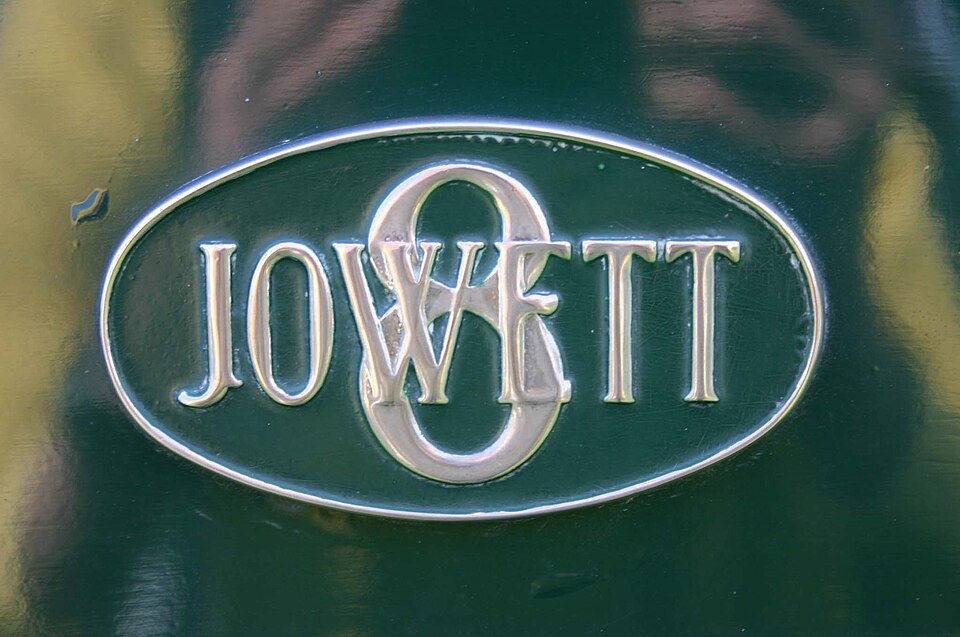
Jowett of Bradford built flat-twin and flat-four cars with genuine originality; the Javelin of 1947 was aerodynamic, fast and comfortable, and the Jupiter won its class at Le Mans. The company died in 1954 when its body supplier was bought out from under it — a perfect illustration of how vulnerable a small British maker was to its supply chain.
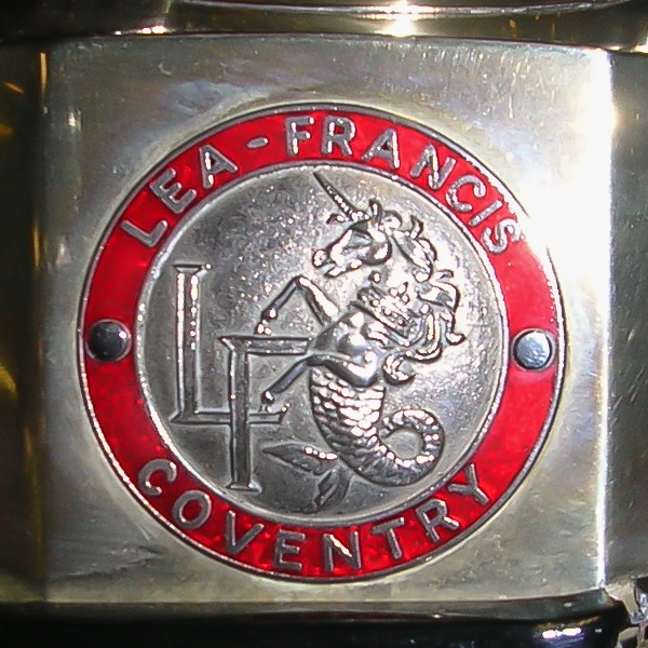
Lea-Francis of Coventry made well-regarded sports and touring cars into the 1950s and has been revived, unsuccessfully, several times since.
Reliant of Tamworth was for a while Britain's second-largest wholly British-owned car maker, on the back of three-wheelers that could be driven on a motorcycle licence. The Robin is a national joke; the Scimitar GTE of 1968, a glass-fibre sporting estate, was a genuinely influential design and Princess Anne owned several. Car production ended in the early 2000s.
Clyno was briefly Britain's third-largest manufacturer in the 1920s before a price war with Morris destroyed it in 1929 — an early demonstration that scale beats charm. Star, Bean, Crossley, Napier, Trojan and dozens of others went the same way in the same decade.
Why Britain lost its car industry
There is no single villain, which is why the argument never ends. Four structural causes do most of the explaining.
Fragmentation and sub-scale plants. Britain entered the 1960s with too many marques, too many factories and too many platforms for its market size. Volume car making rewards enormous runs of identical parts; Britain kept building modest runs of many different things, often in old multi-storey buildings poorly suited to modern flow.
Chronic underinvestment. British car companies distributed profits to shareholders in good years and had nothing to spend in bad ones. Model cycles stretched far beyond their competitors'. When BL finally needed to replace the Mini, the 1100 and the Minor simultaneously, it could not afford to do all three properly, so it did all three badly.
Labour relations. The multi-union structure — with many separate bargaining units in a single plant — made disputes easy to start and hard to settle, and management too often bought peace instead of fixing causes. The strikes of the 1970s were a symptom of a broken system as much as a cause of collapse, but the effect on delivery dates and quality was real and it lost customers who never came back.
Currency and macroeconomics. The 1967 devaluation, the 1973 oil shock, the three-day week, and then the sharp appreciation of sterling around 1979–81 as North Sea oil came onstream and monetary policy tightened. That last one was brutal: British-built exports became abruptly uncompetitive in the exact years BL needed export volume to survive.
Add a fifth if you like: entry into the European Economic Community in 1973 removed tariff protection from a domestic market that had grown comfortable behind it, at the precise moment the domestic products were at their least competitive.
The counterargument: Britain never stopped building cars
Here is the part that complicates the elegy. British factories in the mid-2010s were producing around 1.7 million cars a year — approaching the 1972 peak, with a fraction of the workforce, at vastly higher quality. Output has fallen since, to under a million, on the back of diesel's collapse, Brexit friction, the pandemic and the electric transition. But the engine story is even more striking: UK plants have for years built well over two million engines annually, more than the country's own car output, and export most of them.
The transformation came from inward investment. Nissan opened at Sunderland in 1986, Toyota at Burnaston in 1992, Honda at Swindon in 1989. Sunderland became one of the most productive car plants in Europe and demolished the argument that British workers could not build cars to Japanese standards. Honda closed Swindon in 2021, which shows the model's fragility, but Nissan and Toyota remain.
And then there is Motorsport Valley. The cluster of specialist engineering firms spread across Oxfordshire, Northamptonshire and Surrey now supplies most of world motorsport. The majority of Formula 1 teams are headquartered in England — McLaren at Woking, Williams at Grove, Red Bull at Milton Keynes, Mercedes at Brackley, Aston Martin at Silverstone, Alpine at Enstone — including teams owned by German, Austrian, French and American companies who could base themselves anywhere and choose Northamptonshire. Indycar, Formula E, endurance racing and rallying all draw on the same supply chain of composite shops, gearbox specialists, simulator builders and aerodynamicists.
Britain lost the mass-market brands and kept the engineering. Whether that is a consolation or an indictment depends on whether you think a country should own the badge or the know-how.
The full list: 65 British marques
| Marque | Era | Status |
|---|---|---|
| Rolls-Royce | 1904– | BMW; built at Goodwood |
| Bentley | 1919– | Volkswagen Group; built at Crewe |
| Mini | 1959– | BMW; Oxford and overseas |
| Jaguar | 1935– | Tata Motors |
| Land Rover | 1948– | Tata Motors |
| Lotus | 1952– | Geely |
| MG | 1924– | SAIC; built in China/Thailand |
| Vauxhall | 1903– | Stellantis |
| Aston Martin | 1913– | Independent, publicly listed |
| McLaren | 1992– (cars) | Independent |
| Morgan | 1909– | Investindustrial majority |
| Caterham | 1973– | Independent (Japanese-owned) |
| Ariel | 1999– | Independent |
| BAC | 2011– | Independent |
| Radical | 1997– | Independent |
| Ginetta | 1958– | Independent |
| Noble | 1999– | Independent |
| Ultima | 1992– | Independent |
| Gordon Murray Automotive | 2017– | Independent |
| Westfield | 1982– | Independent, low volume |
| AC | 1901– | Intermittent; Cobra continuations |
| Austin | 1905–1987 | Badge retired by Rover Group |
| Morris | 1913–1984 | Badge retired |
| Riley | 1913–1969 | Killed by British Leyland |
| Wolseley | 1901–1975 | Killed by British Leyland |
| Standard | 1903–1963 | Replaced by Triumph |
| Triumph | 1923–1984 | Name owned by BMW |
| Rover | 1904–2005 | Name owned by Tata |
| Austin-Healey | 1952–1972 | Agreement lapsed |
| Daimler | 1896–2000s | Dormant; owned by Tata |
| Lanchester | 1895–1955 | Dormant |
| Lagonda | 1906– | Dormant under Aston Martin |
| Humber | 1898–1976 | Killed by Chrysler |
| Hillman | 1907–1976 | Killed by Chrysler |
| Singer | 1905–1970 | Killed by Rootes/Chrysler |
| Sunbeam | 1901–1976 | Survived as a model name to 1981 |
| Talbot | 1903–1994 | Retired by Peugeot |
| Alvis | 1919–1967 | Continuation cars today |
| Armstrong Siddeley | 1919–1960 | Merged into Bristol Siddeley |
| Jensen | 1934–1976 | Collapsed; brief revivals |
| Jowett | 1906–1954 | Lost its body supplier |
| Lea-Francis | 1903–1960 | Repeated failed revivals |
| Bristol | 1945–2020 | Wound up |
| TVR | 1947– | Dormant; revival unproven |
| Reliant | 1935–2002 | Three-wheelers and Scimitars |
| Allard | 1945–1958 | Anglo-American specials |
| Frazer Nash | 1922–1957 | Became a BMW importer |
| Invicta | 1925–1950 | Revived, briefly, twice |
| Vanden Plas | Coachbuilder to trim badge | Retired by Rover |
| Marcos | 1959–2007 | Wooden-chassis sports cars |
| Gilbern | 1959–1974 | Wales's only volume maker |
| Bond | 1949–1974 | Absorbed by Reliant |
| Panther | 1972–1990 | Retro specials; Korean-owned at the end |
| Trojan | 1914–1965 | Utility cars, then racing cars |
| Crossley | 1904–1937 | Moved to buses and aircraft |
| Napier | 1900–1924 | Left cars for aero engines |
| Star | 1898–1932 | Wolverhampton; failed in the Depression |
| Clyno | 1922–1929 | Destroyed by a price war with Morris |
| Bean | 1919–1929 | Overexpanded and collapsed |
| Elva | 1955–1968 | Racing and road sports cars |
| Turner | 1951–1966 | Small Wolverhampton sports cars |
| Connaught | 1949–1957 | Won a Grand Prix, then ran out of money |
| HRG | 1936–1956 | Deliberately archaic sports cars |
| Railton | 1933–1949 | British bodies on American chassis |
| Ascari | 1995–2010 | Named after a driver who never drove one |
What to do with this
If you want to understand what Britain lost, the cars are still findable and mostly still cheap. A Rover P6 or an SD1 will show you how good the ideas were. A Hillman Imp will show you how much cleverness went into a car that should have saved Rootes. A Jensen Interceptor will show you what a British grand tourer could be when nobody was counting the cost.
And if you want to see what survived, drive past an industrial estate in Northamptonshire on a weekday. Behind those unmarked doors are the people who build the fastest cars on earth, for teams owned by everyone except the British. That is the real inheritance, and it is doing better than the badges ever did.


