
In 1929, a Japanese engineer named Kiichiro Toyoda sailed to Oldham, in the north of England, to sell a machine. The machine was a loom — his father's loom — and the buyer was Platt Brothers, then one of the great textile-machinery firms of the industrial world. The deal was worth roughly £100,000, a serious sum at the time. Kiichiro took the money home and spent it on something his father's business had no obvious use for: research into petrol engines.
That is the whole company in miniature. A family obsessed with machines that fix their own faults, an outsider's willingness to bet the proceeds of a working business on an unproven one, and a very long time horizon. Toyota did not become the world's largest automaker by being first, or fastest, or loudest. It got there by being relentlessly, almost tediously systematic about improvement — and by surviving several moments when it very nearly ceased to exist.
The loom that stopped itself
Sakichi Toyoda was born in 1867, the son of a carpenter, in a village in what is now Shizuoka Prefecture. Japan was in the first years of the Meiji Restoration, opening itself to Western industry after more than two centuries of isolation, and textiles were the country's route into the modern economy. Sakichi's contribution was not to make weaving faster. It was to make it honest.
His breakthrough, refined across decades and culminating in the Type G automatic loom of 1924, was a mechanism that detected a broken warp thread and stopped the machine instantly. Before that, a loom would keep hammering away, weaving metres of defective cloth that nobody would notice until inspection. After it, a single operator could supervise dozens of looms, because a running machine was a machine that was demonstrably producing good work.
This is jidoka, usually translated as "autonomation" or "automation with a human touch." It is the older of Toyota's two great production ideas and by far the more misunderstood. Jidoka is not about removing people. It is about giving machines the judgement to halt when something is wrong, so that people are freed from watching them and can be spent on solving problems instead. Everything Toyota later did on a factory floor — the andon cord, the refusal to build ahead, the insistence on stopping a line rather than passing a defect downstream — descends from a loom in a Shizuoka workshop that knew when to quit.
Sakichi died in 1930. By then the Toyoda Automatic Loom Works, founded in 1926, was a substantial industrial concern, and his son had already started buying engines to take apart.
Kiichiro's expensive hobby
Kiichiro Toyoda had studied mechanical engineering at Tokyo Imperial University and had seen enough of Europe and America to understand what was coming. Japan in the early 1930s had almost no domestic motor industry to speak of; Ford and General Motors both operated assembly plants in the country and dominated it comfortably. Building cars was, by any conventional analysis, a terrible idea.
He did it anyway. In 1933 an automobile department was formally established inside the loom works. The method was pragmatic to the point of bluntness: buy the best foreign cars available, dismantle them, and learn to make the parts. The Type A engine, a roughly 3.4-litre overhead-valve straight-six completed in 1934, owed a great deal to contemporary Chevrolet practice. The bodywork of the first cars owed at least as much to the Chrysler Airflow, whose streamlined shape had flopped in America but looked, to Japanese eyes, like the future.
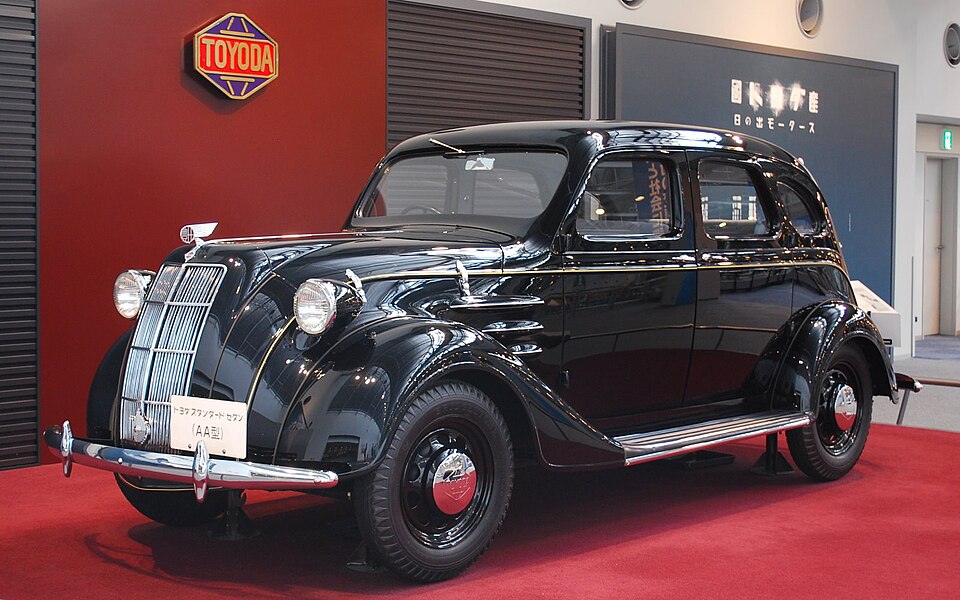
The A1 prototype ran in 1935. The G1 truck followed the same year and was, commercially, the more important machine — Japan's military and industrial expansion created immediate demand for trucks and only modest demand for sedans. The Model AA passenger car went on sale in 1936: a big, soft, six-cylinder saloon with a fastback roofline, built in tiny numbers with a great deal of hand-fitting.
Toyota Motor Co., Ltd. was formally separated from the loom works in August 1937, with Kiichiro's cousin-in-law Risaburo Toyoda as president and Kiichiro as vice-president. The company that would one day build more cars than anyone on earth began life as an offshoot of a textile-machinery firm, funded by the sale of a loom patent to Lancashire.
Why Toyoda became Toyota
The family name is 豊田 — Toyoda — and it means, roughly, "bountiful rice field." It is a good name for a farming family and an odd one for an industrial company. In 1936 the firm ran a public competition for a new logotype, drawing tens of thousands of entries, and the winning direction changed the final syllable from da to ta.
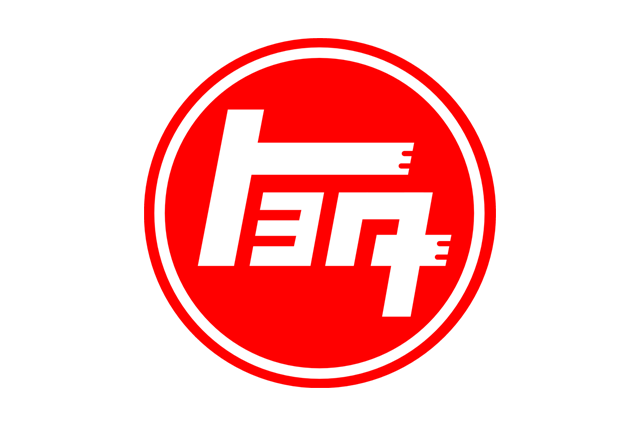
The reasoning was partly aesthetic and partly superstitious, and both parts mattered. Written in katakana, トヨタ takes eight strokes, and eight is an auspicious number in Japan — the character 八 widens as it descends, suggesting increasing prosperity. The voiceless ta was also considered crisper to say and cleaner to render as a mark. And there was a corporate logic underneath: separating the company's name from the family's name signalled that this was a public enterprise rather than a household concern, even though the Toyoda family has never really let go of it.
The mark itself went through many iterations over the following half-century — a diamond, a wordmark, an oval, regional variations — before arriving at the three overlapping ellipses introduced in October 1989 for the company's fiftieth anniversary. Two perpendicular inner ovals are usually explained as the heart of the customer and the heart of the product, enclosed by an outer oval representing the world; more playfully, every letter of T-O-Y-O-T-A can be traced somewhere in the geometry.


Nearly finished: 1949 and 1950
The war left Toyota's plants damaged and its market destroyed. What nearly killed the company, though, was not the bombing but the peace.
In 1949 the Allied occupation imposed the Dodge Line, a brutal deflationary programme designed to stabilise the yen and end hyperinflation. Credit vanished. Customers who had ordered trucks could not pay for them. Toyota was building vehicles it could not sell and could not finance, and by the end of 1949 it was effectively insolvent.
A consortium of banks agreed to rescue it, on conditions that cut to the bone. Production and sales were to be split, with a separate company — Toyota Motor Sales, run by the formidable Shotaro Kamiya — taking responsibility for distribution. Output was to be matched strictly to orders. And the workforce had to shrink by something on the order of one to two thousand people, in a company that had promised lifetime employment.
The result was a bitter labour dispute in the spring of 1950, with strikes and occupations that lasted for months. It ended with the redundancies going ahead and with Kiichiro Toyoda resigning the presidency in June 1950 as a matter of honour, taking responsibility for a failure he had not personally caused. Taizo Ishida, a loom-works man, took over. Kiichiro died in 1952 at 57, before the company he founded had built anything the world would remember.
Two things came out of that trauma. The first was salvation: the Korean War broke out weeks after the settlement, and US military orders for thousands of trucks refilled Toyota's order book almost overnight. The second was a doctrine. Toyota's management concluded that mass layoffs were a catastrophic failure of planning, and the implicit bargain that followed — job security in exchange for continuous improvement and total flexibility — is the social foundation on which the Toyota Production System was built. You cannot ask workers to eliminate their own jobs' inefficiencies if eliminating inefficiency gets them fired.
Taiichi Ohno and the system nobody could copy
Taiichi Ohno came from the loom side of the business, which is exactly the point. He arrived at the car plants in the 1940s carrying Sakichi's jidoka in one hand and Kiichiro's phrase just-in-time in the other, and spent the next thirty years turning two slogans into a working method.
The constraint that shaped everything was scale. In the early 1950s Toyota built a few thousand vehicles a year across several models, on machinery it could not afford to replace. Ford's River Rouge, which Eiji Toyoda toured in 1950, built more vehicles in a day than Toyota built in a year. Copying Detroit was impossible; American mass production depended on enormous batches, huge inventories and the assumption that defects would be caught at the end. Toyota had no cash to hold inventory and no volume to justify batches.
So Ohno inverted it. Make only what has been ordered. Pull material forward from the previous process only when you consume it, signalled by a card — a kanban — rather than pushed forward by a schedule. Shrink batch sizes until a press line can change dies in minutes rather than hours, a discipline Shigeo Shingo formalised as single-minute exchange of die. Level the production sequence (heijunka) so that demand hits suppliers smoothly instead of in waves. Attack the three enemies: muda (waste), mura (unevenness) and muri (overburden).
The supermarket story is the famous one. Visiting the United States in the mid-1950s, Ohno was less impressed by the car factories than by the grocery stores, where shelves were restocked precisely as customers removed items, and nobody kept a warehouse of tinned goods in the aisle. That is the pull system, running in public.
The cord that stops the line
The cultural half is harder. Every worker on a Toyota line has the authority — and the obligation — to pull the andon cord and stop production when something is wrong. In a conventional plant, stopping the line is a firing offence. At Toyota it is the system functioning correctly: a problem surfaced immediately, at the moment and place it occurred, while the evidence is still warm.
Then comes kaizen, continuous improvement, driven by the workers themselves through the five whys — asking why repeatedly until you pass the symptom and reach the cause. A puddle of oil is not solved by mopping it up, nor by replacing the failed gasket, but by fixing the procurement rule that bought the cheap gaskets in the first place.
From the late 1970s onwards, Western manufacturers noticed that Japanese cars were both cheaper and better and set about copying the mechanics. They installed kanban cards. They put cords over the line. It largely did not work, because they had bought the tools without the philosophy: line-stop authority is meaningless if a supervisor punishes you for using it, and just-in-time without ruthless quality discipline simply means the whole factory halts when one bad part arrives.
The clearest proof came at NUMMI, the joint venture Toyota and General Motors opened in Fremont, California in 1984, in a plant GM had closed after years of appalling quality and labour relations. Toyota rehired most of the same workforce, taught them the system, and the plant became one of the best in North America. The people had never been the problem.
MIT's International Motor Vehicle Program spent years documenting all this, and the 1990 book that emerged from it — The Machine That Changed the World — gave the West the word lean production. Three decades later, hospitals, software teams and coffee chains still run on vocabulary invented to make a Japanese truck plant survive a cash shortage.
The Crown, and a humiliation in California
The Toyopet Crown of 1955 was the first passenger car Toyota designed entirely in-house for civilian buyers: a modest, sturdy saloon with suicide-hinged rear doors, built for Japanese taxi fleets and terrible Japanese roads. In its home market it was a genuine success and the foundation of the company's passenger-car business.
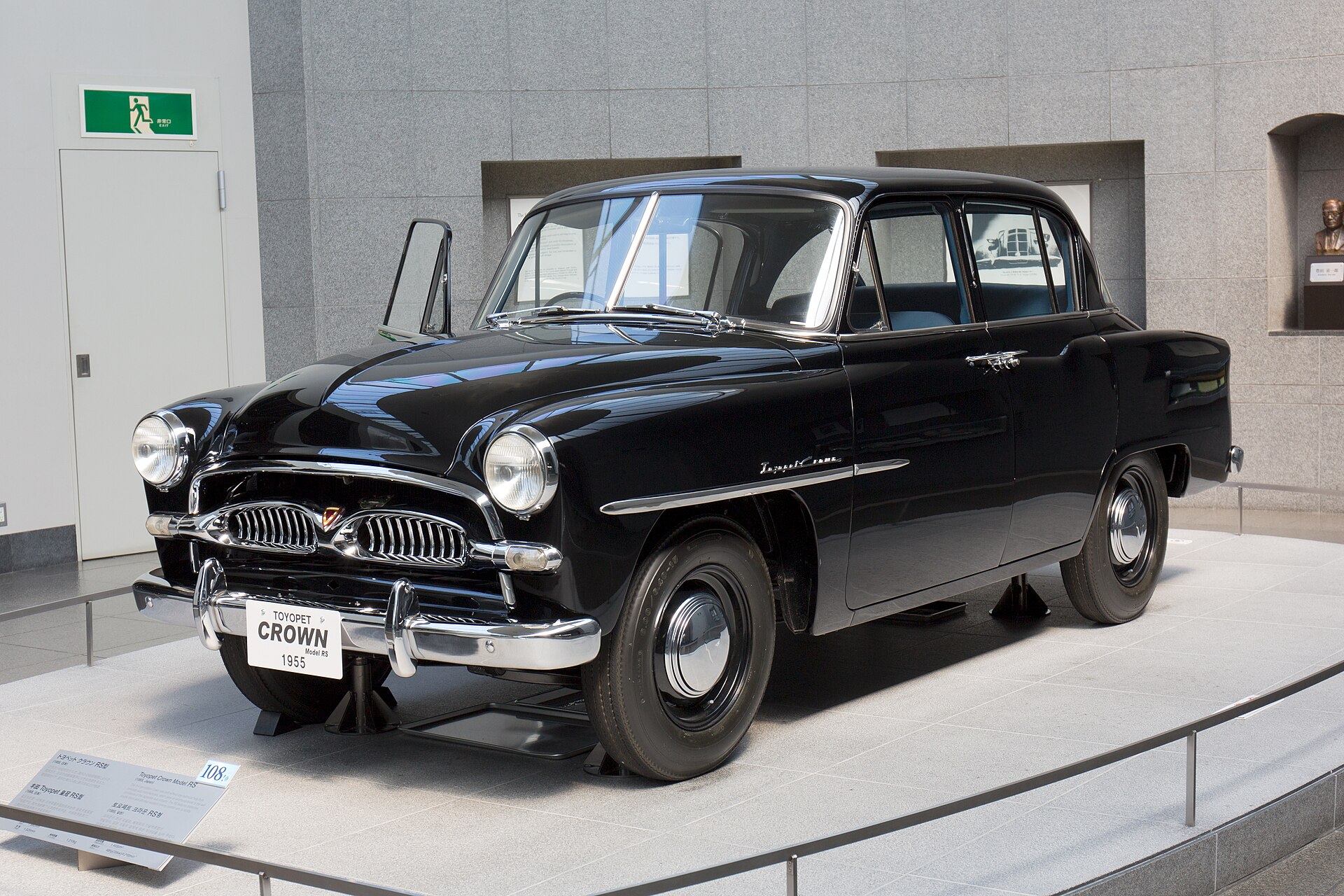
Encouraged, Toyota shipped it to the United States in 1957 and opened Toyota Motor Sales USA in Hollywood. It was a disaster. The Crown had been engineered for a country where sustained speeds were low and journeys were short. On American highways it was desperately underpowered, noisy at cruising speed, prone to overheating and generally out of its depth. Dealers could not sell it, and the few customers who bought one were rarely repeat buyers.
Toyota withdrew passenger cars from the US market around 1960, keeping only the Land Cruiser on sale, and went home to think. The reaction is the interesting part: no bluster, no attempt to blame the customer, just a methodical programme to build a car that could survive an American freeway. The Corona returned in the mid-1960s with the durability testing to back it up, and this time it stuck.
The Corolla: the best-selling car in history
In November 1966 Toyota launched a small, conservative, rear-drive saloon developed under Tatsuo Hasegawa, an engineer who had spent the war designing aircraft. The Corolla was not innovative and was never meant to be. Hasegawa's stated philosophy was to score "80 points and more" across every attribute — good at everything, outstanding at nothing, bad at nothing.
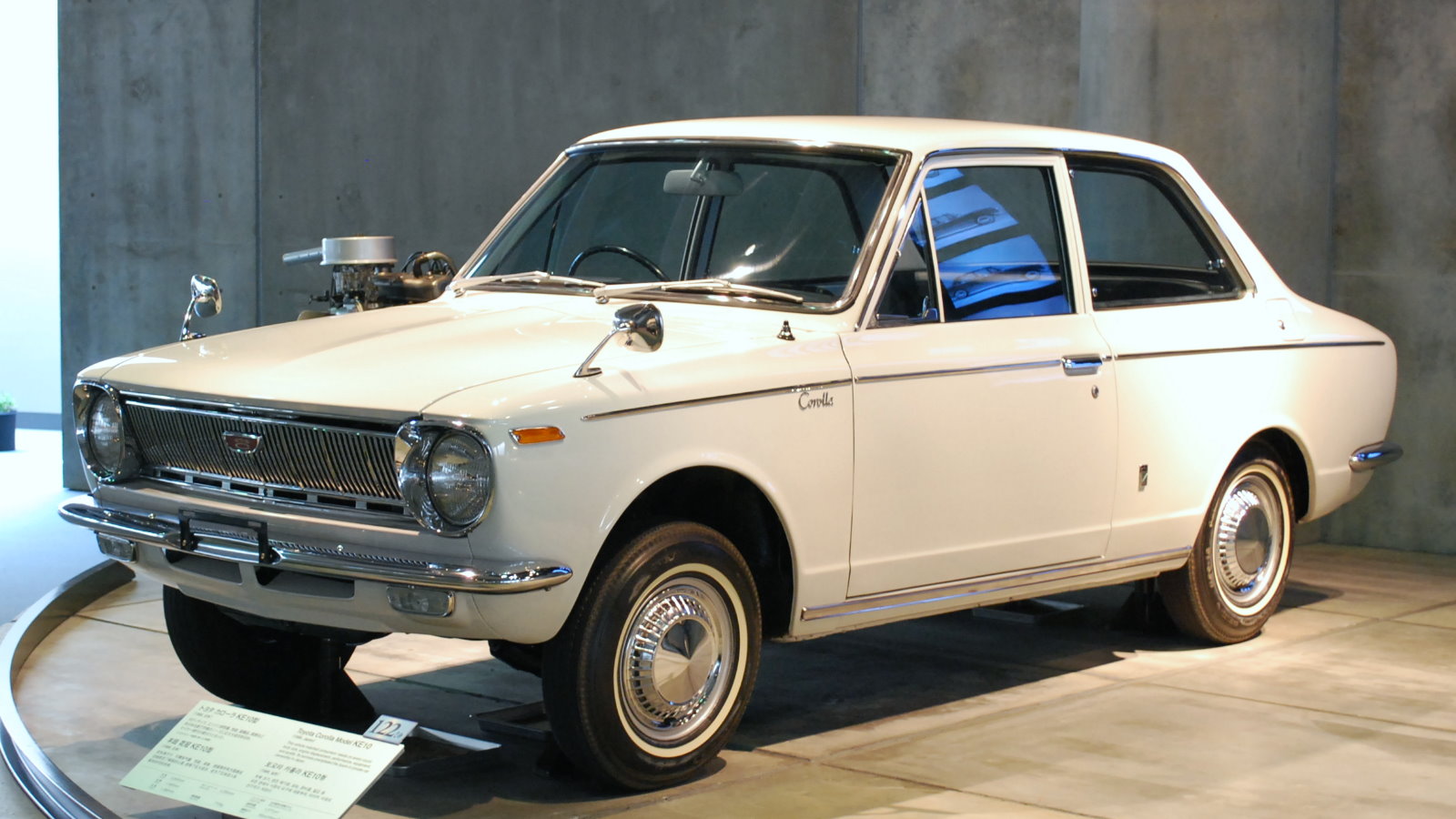
That sounds like faint praise until you notice what it produces: a car with no reason to reject it. The Corolla arrived exactly as Japan's own middle class was motorising and as the developing world was starting to buy cars in volume. It had a curved windscreen, a four-speed floor shift and, in a small piece of marketing genius, slightly more engine than its direct rival, the Nissan Sunny.
Twelve generations later, the Corolla is the best-selling nameplate in automotive history, with cumulative sales comfortably past 50 million units across more than 150 markets. It has been rear-drive and front-drive, a saloon, an estate, a hatchback, a crossover, a hot hatch and a hybrid. Toyota has never once been tempted to make it exciting, and that restraint is why it is still here.
| Toyota's pillars | Introduced | Why it mattered |
|---|---|---|
| Land Cruiser | 1951 (BJ), named 1954 | Built the brand's reputation for indestructibility |
| Crown | 1955 | First in-house passenger car; Japan's default executive saloon |
| Corolla | 1966 | Volume, everywhere, forever |
| Hilux | 1968 | The world's default working pickup |
| Lexus LS 400 | 1989 | Proved Toyota could out-engineer Germany |
| Prius | 1997 | Made hybrids mainstream and defined "green car" |
| GR Yaris | 2020 | Homologation special that restored the brand's credibility with enthusiasts |
Land Cruiser and Hilux: the reputation you cannot buy
The Land Cruiser began in 1951 as the BJ, a Jeep-inspired utility built for Japan's police and, initially, a US procurement contract Toyota lost. It acquired its name in 1954 and its defining shape with the FJ40 of 1960: short, upright, unstoppable, powered by a long-stroke petrol six with more torque than sophistication.
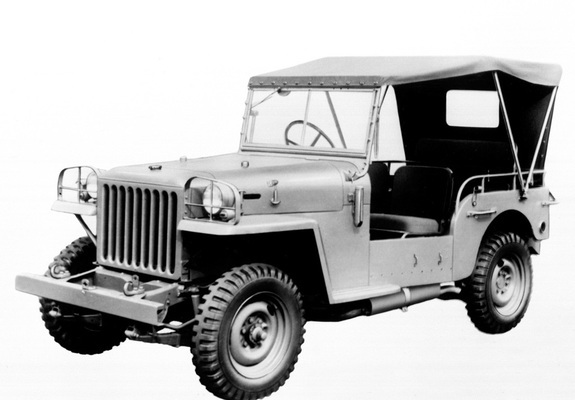
What made the Land Cruiser a legend was not engineering brilliance but a specific institutional decision — Toyota kept over-building it long after the market would have accepted less. Aid agencies, mining companies, armies, ranchers and the UN bought them because in places with no dealer network, no spare parts and no paved roads, the failure of a vehicle is a life-threatening event. The 40, 60, 70, 80, 100, 200 and 300 series form an unbroken line, and the 70 Series in particular has been in production, with updates, since 1984 because customers in Australia and Africa simply refused to let it die.
The Hilux, launched in 1968, did the same job one class down. It is the pickup you see in every documentary about every remote place on earth, and it earned a peculiar second life in 2003 when a British television programme spent an episode trying to destroy one — drowning it, hitting it with a caravan, setting it on fire, dropping a building on it — and largely failed. That was not an advertisement Toyota could have bought. It was thirty-five years of engineering conservatism cashing a cheque.
Lexus, and the car that frightened Stuttgart
By the early 1980s Toyota had a problem of its own making. It sold enormous numbers of reliable, sensible, cheap cars, and the badge had become a synonym for exactly that. Buyers who grew prosperous traded up to a Mercedes-Benz or a BMW, and Toyota watched them leave.
In 1983 the company launched a secret programme, generally known as F1 (for "flagship one"), with an unusually simple brief attributed to chairman Eiji Toyoda: build the best car in the world. The budget was effectively unlimited by Toyota's standards, hundreds of engineers were assigned, and dozens of engine prototypes and full-scale design studies were built and discarded. Teams were sent to live in southern California to study how wealthy Americans actually used cars.

The result was shown in January 1989 and reached showrooms that autumn. The Lexus LS 400 used a 4.0-litre quad-cam V8 — the 1UZ-FE, around 250 horsepower — mounted with obsessive attention to vibration, in a body with a drag coefficient of about 0.29 and panel gaps that embarrassed everyone. It undercut the equivalent Mercedes S-Class substantially on price while being quieter and, as the world quickly discovered, vastly more reliable.
The advertising made the point better than any spec sheet: a pyramid of champagne glasses stacked on the bonnet while the engine ran to high revs on a dynamometer, the liquid barely trembling. German engineers reportedly bought LS 400s and took them apart, and the response was visible within a few years in the way Mercedes and BMW approached build quality, dealer service and warranty.
Lexus also invented a new competitive weapon: the ownership experience. Loaner cars, no-haggle pricing, service departments that treated a recall as an apology rather than an inconvenience. When a small fault emerged in the first LS 400s, Lexus recalled them, and in many cases collected the cars from owners' driveways and returned them washed. Nissan launched Infiniti the same year with a stranger, more poetic campaign and never recovered the ground.
Betting the decade on the Prius
In the early 1990s Toyota began an internal project, eventually codenamed G21, to imagine what a car should be in the twenty-first century. The target was roughly double the fuel efficiency of a conventional saloon. The team concluded, after considering many alternatives, that the only way to get there in a car people could actually buy was a petrol-electric hybrid — a small combustion engine running near its efficient sweet spot, an electric motor, a generator, a battery, and a planetary gearset blending them.
The Prius went on sale in Japan in December 1997, becoming the first mass-produced hybrid car, and reached global markets from 2000. It was expensive to build — for the first years Toyota was almost certainly losing money on every one — awkward to look at, and slow. It was also the single best piece of brand positioning any carmaker executed in that generation.
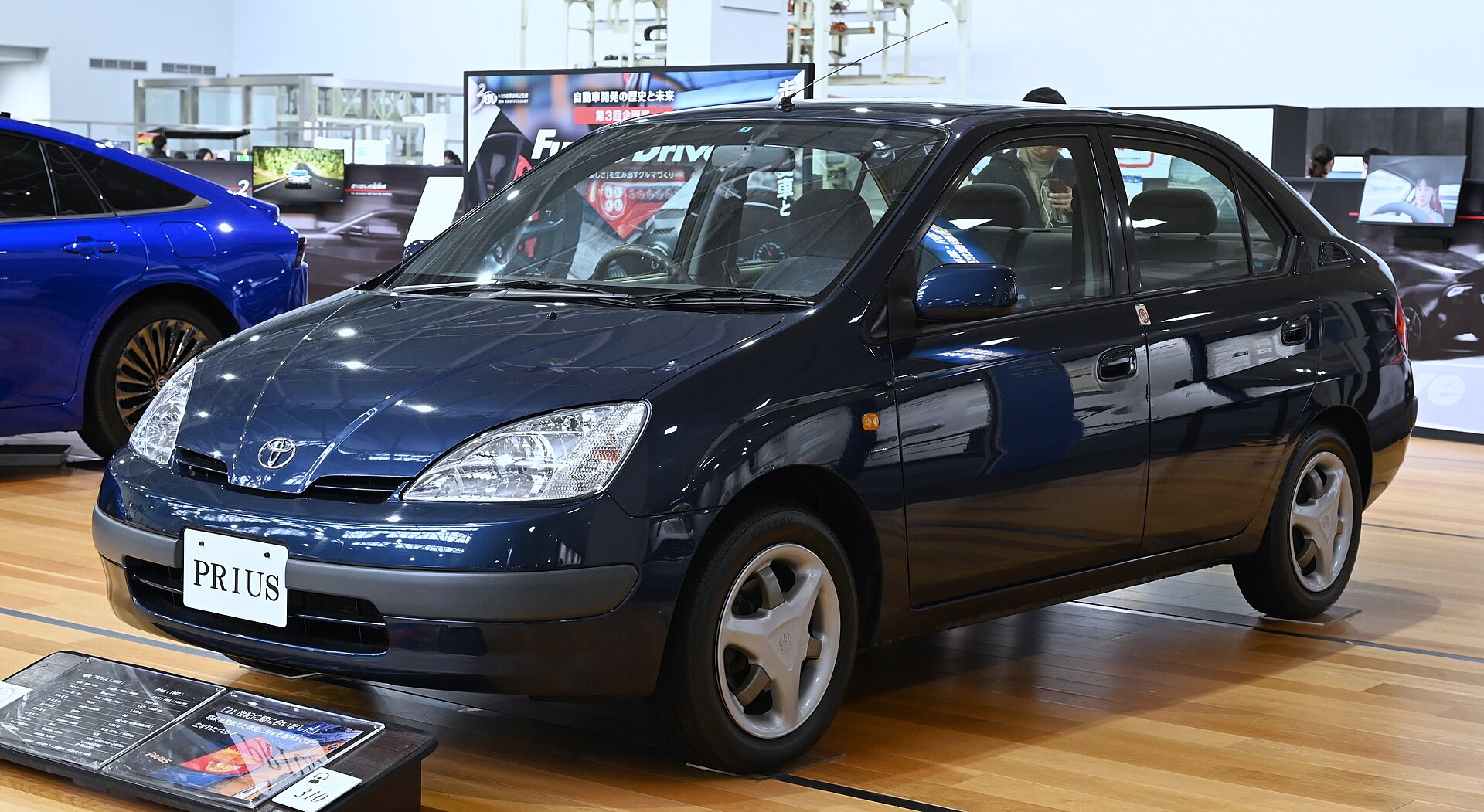
The second-generation Prius of 2003, with its distinctive wedge-and-Kammback silhouette, is when it became a cultural object. The shape was deliberately unmistakable: buyers wanted to be seen making the choice, and a hybrid that looked like a normal Corolla could not deliver that. Hollywood adopted it, taxi fleets did the arithmetic on fuel and brake wear, and Toyota accumulated something more valuable than the sales — a decade of real-world data on batteries, power electronics and motor durability that nobody else had.
That data is why Toyota's hybrid system aged so well. The company has since sold well over 20 million electrified vehicles, the vast majority of them hybrids, and quietly turned the technology from a niche curiosity into the default powertrain across the Corolla, RAV4, Camry and Yaris ranges.
Too big, too fast: the recall crisis
In 2008 Toyota passed General Motors to become the largest vehicle manufacturer in the world by production, ending a run at the top that had lasted roughly seven decades. The timing was almost comically bad. The financial crisis hit within months, and Toyota posted its first operating loss in decades.
Then came the recalls. From 2009, reports of unintended acceleration in Toyota and Lexus vehicles in the United States escalated into a full-blown crisis, triggered in part by a horrific and widely publicised crash involving a loaner Lexus. Toyota's initial explanation — improperly fitted floor mats trapping the accelerator pedal — was followed by a second cause, a friction mechanism in certain pedal assemblies that could stick. Over 2009 to 2011 the company recalled something in the region of nine to ten million vehicles worldwide, suspended sales and production of several models, and absorbed fines and litigation costs running into billions of dollars.
Akio Toyoda, the founder's grandson, had become president in June 2009, weeks before the storm. In February 2010 he testified before a US Congressional committee, and his testimony was notable for what it did not do: it did not deflect. He said, in effect, that Toyota had grown too quickly, that the pace of expansion had outrun the company's ability to develop people, and that its priorities had drifted into the wrong order. Safety first, then quality, then volume — and Toyota, he admitted, had let volume climb the list.
A subsequent NHTSA investigation, drawing on NASA engineers, found no evidence that the vehicles' electronic throttle systems caused unintended acceleration. But the reputational damage was done, and the internal response was more interesting than the exoneration. Toyota slowed its growth deliberately, put brakes on new plant construction, decentralised decision-making so regional executives could act without waiting on Japan, and rebuilt product development around the Toyota New Global Architecture — a modular platform strategy launched from 2015 that shares far more between models while, crucially, improving the driving position and centre of gravity that Toyota had let slide.
The EV argument Toyota kept losing in public
For most of the 2010s and into the 2020s, Toyota was the most criticised large carmaker on the subject of electrification — an irony given that it had done more than anyone to popularise electrified drivetrains. It sold a RAV4 EV built with Tesla technology in small numbers, bet substantially on hydrogen fuel cells with the Mirai from 2014, and did not launch a serious mass-market battery electric car until the bZ4X in 2022, developed jointly with Subaru, which sells the near-identical Solterra.
The launch went badly. Within weeks the bZ4X was recalled over a risk that wheel hub bolts could loosen, and Toyota bought vehicles back from some early customers. Reviewers found the range and charging speed merely adequate against Korean and Chinese rivals, and environmental campaigners repeatedly ranked Toyota last among major manufacturers on decarbonisation, criticising its lobbying as much as its products.
Toyota's defence, argued most forcefully by Akio Toyoda himself, is the multi-pathway strategy. The reasoning runs like this: battery raw materials are the binding constraint, so the materials for one 100 kWh electric car could instead build many hybrids, and across a global fleet the hybrids will displace more petrol sooner. Add that grids differ enormously in carbon intensity, that charging infrastructure is absent across much of the world where Toyota sells, and that Toyota supports millions of jobs across a supplier base that cannot be rebuilt overnight, and the case for hedging becomes coherent rather than merely conservative.
Whether it was right is genuinely contested. Toyota was clearly late, and its early electric products were not good enough. It was also clearly correct that hybrid demand would surge in the mid-2020s as EV growth slowed in several Western markets and buyers balked at charging — a period in which Toyota's hybrid-heavy range sold about as fast as it could be built. Koji Sato, who took over as president in 2023 with Akio Toyoda moving to chairman, has since accelerated the battery-electric programme substantially, promising a new dedicated platform, much longer ranges and, eventually, solid-state cells.
GR: the company remembers how to have fun
The other criticism that stuck to Toyota through the 2000s was that its cars had become numb. The company that built the 2000GT, the AE86 Corolla, the Supra and the MR2 had spent two decades optimising for the customer who wanted nothing to go wrong, and had engineered the joy out in the process.
Akio Toyoda's answer was personal. A trained test driver who has raced at the Nürburgring 24 Hours under the pseudonym "Morizo," he pushed the company to develop cars through motorsport rather than around it. The Gazoo Racing operation grew from an internal enthusiast project into a full works programme covering the World Rally Championship, Le Mans prototypes and Dakar — and, more importantly, into a road-car brand.
The evidence arrived in stages. The Lexus LFA of 2010, a 4.8-litre V10 supercar built in a run of 500 with a carbon-fibre tub Toyota developed the weaving technology for itself, was a commercial folly and an engineering statement. The GT86 of 2012, co-developed with Subaru, was a cheap, light, deliberately low-grip rear-drive coupé aimed squarely at drivers. The A90 Supra returned in 2019 on BMW underpinnings, which enthusiasts complained about at length while buying it anyway.
The purest of them is the GR Yaris of 2020: a three-door, all-wheel-drive homologation special with a bespoke 1.6-litre three-cylinder turbo producing around 260 horsepower, a hand-assembled body combining steel, aluminium and composite, and almost nothing in common with the ordinary Yaris beyond the name. Toyota built it because the rally programme needed it, and it is the sort of car large corporations no longer make. The GR Corolla followed in 2022 with the same engine and the same intent.
What the loom still teaches
Toyota has been the world's largest automaker for most of the years since 2008, trading the position with Volkswagen and General Motors during the recall and pandemic years and holding it comfortably through the 2020s, with group production — including Daihatsu and Hino — running in the region of 10 to 11 million vehicles annually. Its market capitalisation has spent long stretches above every other traditional carmaker's. It has also had to face down its own quality demons again in the 2020s, when certification-testing irregularities at Daihatsu and within Toyota itself forced production halts and public apologies from the top of the company.
That, too, is oddly consistent. The organisation's most durable habit is not excellence — it is the assumption that something is currently wrong and has not yet been found. Jidoka says stop the machine when the thread breaks. Kaizen says the current method is the worst acceptable method. The five whys say your first explanation is a symptom.
Next time you are told a company has a "culture of continuous improvement," ask one question: what happens to the person who stops the line? If the honest answer is that they get a difficult conversation with a manager, the rest is decoration. Sakichi Toyoda answered that question in 1924 with a piece of metal that halted a loom over a single broken thread, and his descendants built the biggest car company on earth on the assumption that he was right.


