
Stand in a Chinese shopping-mall car showroom and you will see badges that mean nothing to you, attached to companies you have heard of, owned by companies you have not. The Lotus in the corner is Malaysian-registered and Chinese-controlled. The Volvo across the aisle answers to a man from Taizhou who started out making refrigerator parts. The van outside was once a British firm from Birmingham. And the electric hatchback with the cat-themed name belongs to a pickup-truck manufacturer from Hebei province.
China does not just have more car brands than any other country. It has more car brands than the rest of the world's major markets combined, and the relationships between them are a genuine tangle of state conglomerates, joint ventures, sub-brands, spin-offs, alliances and collapses. This is an attempt to untangle it.
Why There Are So Many Brands in the First Place
The proliferation is not an accident of taste. It is the residue of policy.
For most of the industry's modern history, Chinese carmakers were organised as provincial or municipal state enterprises, each with its own factory, its own workforce and its own political patron. Shanghai had one. Changchun had one. Chongqing, Guangzhou, Beijing and Wuhan all had theirs. Consolidating them would have meant closing plants in somebody's city, which is a decision no one wanted to sign.
Then came the joint-venture era, which added a second layer: every state group ended up running two or three partnerships with foreign manufacturers alongside its own domestic marque. Then the electric transition added a third, as almost every group launched a fresh EV brand rather than contaminate the old one with battery-powered products nobody was sure would sell.
The result is that a single company like SAIC can simultaneously sell you a British sports-car badge, a fake-British luxury saloon, a Chinese-market Volkswagen, a Chinese-market Buick, a Guangxi-built microvan and a Shanghai-built luxury EV — and all of it is one balance sheet.
The Joint-Venture Bargain That Built the Industry
The founding deal was simple and, for a long time, spectacularly effective. Foreign carmakers wanted access to a market of a billion people. Beijing wanted factories, jobs and, above all, engineering knowledge. So it made a rule: you may sell here, but you must build here, and you must build here with a Chinese partner who owns at least half of the venture.
Beijing Jeep, formed with American Motors in the mid-1980s, is usually cited as the first. Shanghai Volkswagen followed almost immediately and turned the Santana into the single most familiar object on Chinese roads for two decades — the default taxi, the default government car, the default driving-school car. Guangzhou Peugeot came next and failed; Guangzhou later rebuilt itself around Honda and Toyota instead.
The pattern held for thirty years. SAIC took Volkswagen and General Motors. FAW took Volkswagen and Toyota. Dongfeng took Nissan, Honda and PSA. Changan took Ford, Mazda and Suzuki. GAC took Honda, Toyota, Fiat and Mitsubishi. BAIC took Hyundai and Mercedes-Benz.
For the state groups, this was a licence to print money — and, arguably, a trap. Joint-venture profits were so reliable that the incentive to develop competitive in-house products was weak. The companies that eventually reshaped the industry were mostly the ones locked out of the party: private firms with no foreign partner and nothing to lose.
The ownership cap was finally dismantled in stages. Electric-vehicle manufacturing was opened to full foreign ownership first, which is why Tesla was able to build its Shanghai plant outright rather than through a partner. Commercial vehicles followed, and the passenger-car cap was scrapped at the start of 2022 — after which BMW promptly raised its stake in its Shenyang venture to a controlling 75%.
SAIC: Shanghai's Conglomerate and Its British Salvage Yard
SAIC Motor is the largest of the state groups by volume, and the most eccentric in its brand collection.
Its two great joint ventures — SAIC Volkswagen and SAIC-GM — still shift enormous numbers of Passats, Lavidas, Buicks and Cadillacs. But SAIC's own-brand story begins with the collapse of MG Rover in 2005. SAIC had already bought the intellectual property for the Rover 75 and 25. When the company went under, rival Nanjing Automobile bought the physical assets, including the Longbridge line and the MG name. In 2007 the two Chinese firms merged, and SAIC found itself owning both halves of the wreck.
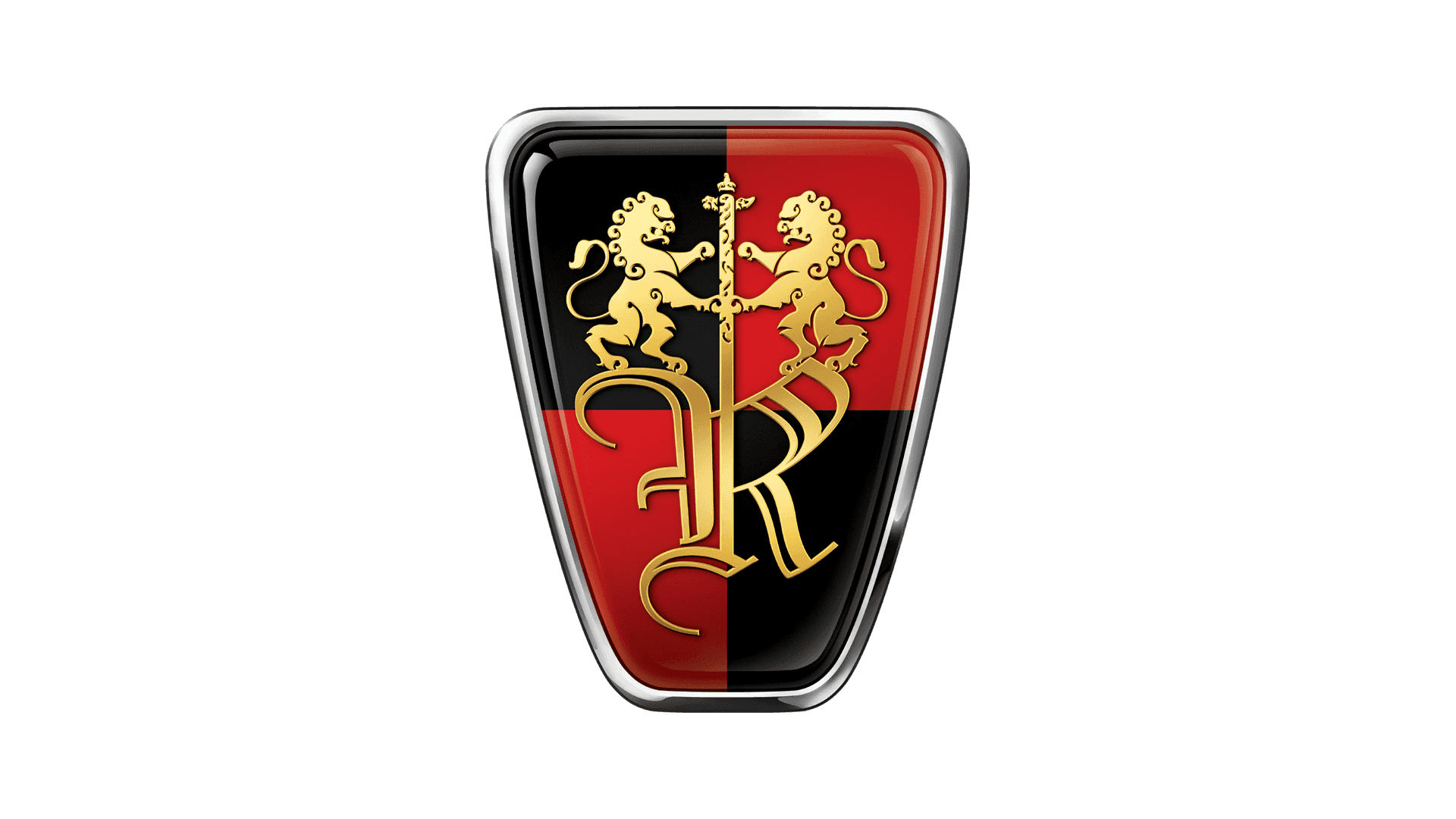
Because BMW held the Rover name and Ford held Land Rover, SAIC could not use "Rover" at all. So it invented Roewe — a near-homophone, badged with a pair of rampant lions on a shield, borrowing the visual grammar of British heraldry without borrowing anything legally actionable. The first Roewe 750 was a rebodied Rover 75.
MG, meanwhile, was left largely alone, and has turned into SAIC's most valuable export asset. The octagon is one of the oldest surviving badges in the industry and SAIC has never seriously meddled with it. In Britain, Australia and much of continental Europe, MG now sells more cars than it ever did as a British company.
SAIC also bought the remains of LDV, the Birmingham van maker, and revived it as Maxus. Add IM Motors — a premium EV venture launched around 2020 with Alibaba as a partner — and Rising Auto, and the portfolio spans four continents' worth of inherited nameplates.
The oddest and most successful piece is SAIC-GM-Wuling, a three-way venture in Guangxi in which GM holds a substantial minority. Wuling built its reputation on cheap microvans for rural China, then produced the Hongguang Mini EV — a tiny, slow, deliberately crude two-door that undercut everything on the market and became, for a period, the best-selling electric vehicle in the country. Its sister brand Baojun sits a rung above it.
FAW: Changchun, Jiefang Trucks and the Red Flag
First Automobile Works was founded in Changchun in 1953 with Soviet assistance, and for a long time it was simply "the" Chinese car industry. Its Jiefang truck was the first mass-produced motor vehicle in the People's Republic.
Hongqi — "Red Flag" — arrived at the end of the 1950s as the state limousine, a heavy, ceremonial machine built in tiny numbers for officials and visiting dignitaries. It is the closest thing China has to a heritage luxury marque, and the only Chinese badge with genuine political weight: the flag-shaped emblem on the bonnet is a national symbol before it is a commercial one, and the Chinese script associated with the brand is traditionally said to derive from Mao Zedong's own calligraphy.
Hongqi spent decades as a loss-making prestige project. Its revival in the last ten years — into a full range of large saloons and SUVs, plus electric models — has been one of the more surprising second acts in the industry.
FAW's other own-brand is Bestune, a mainstream nameplate that has never quite found a personality. Its third is stranger: Jetta, which Volkswagen carved out of a single model name and turned into a standalone budget marque under the FAW-VW venture at the end of the 2010s — a German model badge promoted to a Chinese brand.
Dongfeng: The Mountain Factory With a Brand Farm
Dongfeng began life as the Second Automobile Works, established in 1969 in Shiyan, deep in the hills of Hubei — a location chosen for military survivability rather than logistics, under the inland-industrialisation policy of the period. It is still headquartered in the province and is still, at heart, a truck company.
Its brand structure is the most confusing of any state group, partly because so many of its names are translations of the same idea. Aeolus is the mainstream passenger brand (the Chinese name, Fengshen, means "wind god"). Forthing is a second mainstream line aimed at family vehicles. Voyah is the premium electric brand, launched around 2020, with a range that includes a large SUV and an unusually plush electric MPV.
The most characterful is M-Hero, developed from Dongfeng's Mengshi military light vehicle — essentially China's Humvee — and turned into a brutalist electric off-roader with a boxy silhouette and enough power to do party tricks in mud.
Dongfeng also holds joint ventures with Nissan and Honda, and for years held one with PSA. It once owned a meaningful stake in the French parent itself, which it has since reduced.
Changan: An Arsenal From 1862 With Huawei on Speed Dial
Changan traces its corporate lineage to a Qing-dynasty armaments bureau founded in the 1860s, which makes it, on paper, one of the oldest industrial enterprises in China. In practice its modern identity was built on microvans and on joint ventures with Ford, Mazda and Suzuki.
Its recent reinvention has been aggressive. Deepal is the mainstream electric and range-extender brand. Kaicene and Oshan cover commercial and value-oriented vehicles. But the interesting one is Avatr.
Avatr is a three-way project: Changan supplies the manufacturing and the vehicle engineering, CATL supplies the batteries, and Huawei supplies the electronics, software and cabin experience. It began as a venture between Changan and NIO before being restructured and rebranded around 2021. The badge is a minimal, almost fashion-label wordmark, and the whole brand is positioned as a technology product that happens to have wheels.

GAC and BAIC: The Southern and Northern JV Houses
GAC, the Guangzhou group, is the most joint-venture-dependent of the majors, having built its profitability on Honda and Toyota. Its own-brand efforts are Trumpchi — a name that has caused predictable difficulty in English-speaking markets — and Aion, its electric division.
Aion is worth attention because of how it grew. Its S saloon and Y crossover became enormously popular with ride-hailing fleets, which gave the brand real volume long before it had much retail brand equity. GAC later added Hyptec as an upmarket electric line, and holds an interest in Hycan, a venture originally formed with NIO.
BAIC, the Beijing group, is best known abroad for something other than its cars: it holds a stake of roughly 5% in Mercedes-Benz's parent company, acquired at the end of the 2010s, alongside its long-running Beijing Benz manufacturing venture. Its own brands include Arcfox, a premium EV line that produced some of the earliest cars developed with Huawei's driver-assistance stack, and Stelato, a newer Huawei-partnered luxury brand.
Geely: The Private Empire
If one company explains modern China's position in the global car industry, it is Geely — and if one person does, it is its founder, Li Shufu.
Geely began in Taizhou, Zhejiang, making refrigerator components, then motorcycles, then in 1998 its first car, built without a manufacturing licence in a country that did not want private companies building cars at all. The early products were poor. Li's stated ambition — to make cars that were "cheap and cheerful" and to eventually buy a European brand — was treated as a joke.
In 2010 Geely bought Volvo Cars from Ford for roughly $1.8 billion. The purchase is now taught as a case study in how not to destroy an acquisition: Li left Volvo's Gothenburg engineering organisation intact, funded it properly, opened the Chinese market to it, and let it design its own future. Volvo's subsequent product renaissance — the XC90, the XC60, the entire Scalable Product Architecture — was Swedish work paid for with Chinese money.
Everything after that flowed from the same playbook:
- Lynk & Co, launched in 2016, built on shared Volvo–Geely architecture, aimed at younger buyers with subscription-style ownership and a deliberately un-chrome, graphic-design-led badge.
- Polestar, formerly Volvo's Swedish performance tuner, restructured in 2017 into a standalone electric brand and later listed in New York.
- Lotus, acquired in 2017 from Malaysia's DRB-HICOM, along with just under half of Proton. Lotus has since been repositioned around electric SUVs and saloons, to the visible discomfort of purists.
- LEVC, the maker of the London black cab, rescued after the collapse of Manganese Bronze.
- Zeekr, launched in 2021 as a premium electric brand, later consolidated back under Geely's control after a period as a separately listed company.
- Livan, a venture built on the remains of the troubled Lifan group, focused on battery-swap vehicles.
- Radar, an electric pickup brand.
- Geely Galaxy, the mainstream electric and hybrid line that absorbed the earlier Geometry brand.
- Smart, run as a fifty-fifty venture with Mercedes-Benz, with German design and Chinese engineering.
On top of the corporate holdings, Li Shufu personally acquired a stake of just under 10% in Daimler in 2018, briefly making him its largest single shareholder — a position built quietly through derivatives and announced only when it was complete. Geely-affiliated entities have also taken positions in Aston Martin, Renault's Korean operation and the Volvo truck group.
No other Chinese company has anything close to this reach. Geely is not simply a carmaker; it is a holding structure that happens to own a substantial slice of European automotive engineering.
BYD: The Battery Company That Learned to Build Cars
BYD is the opposite story. Where Geely bought its way into competence, BYD built everything itself, starting from a completely different industry.
Wang Chuanfu founded the company in Shenzhen in 1995 to make rechargeable batteries for mobile phones — and won by replacing Japanese automation with enormous, meticulously organised manual production lines. It entered the car business in 2003 by acquiring a small, struggling state manufacturer, a move that caused its own investors to revolt.
For fifteen years BYD made mediocre cars with excellent batteries. Warren Buffett's Berkshire Hathaway took a stake in 2008, which bought credibility but not immediate results. The turn came around 2020 with two things: the Blade Battery, a lithium-iron-phosphate pack whose long, thin cells allowed the battery to double as a structural element, and the DM-i plug-in hybrid system, which offered a genuinely usable electric range at a price undercutting conventional petrol rivals.
In March 2022 BYD stopped building pure internal-combustion cars entirely — the first major manufacturer anywhere to do it.
The vertical integration is the real weapon. BYD makes its own cells, its own motors, its own power electronics, its own semiconductors, and even ships its cars on its own ocean-going car carriers. When component costs spiked across the industry, BYD's cost structure barely moved.
Above the core brand sit three others: Denza, originally a joint venture with Daimler and now overwhelmingly BYD-controlled, aimed at premium MPVs and SUVs; Yangwang, a genuine luxury effort whose U8 SUV uses four independent motors to rotate on the spot and, notoriously, to float briefly in water; and Fangchengbao, a rugged, off-road-leaning line.
The badge changed too. The old blue oval with "BYD" inside it — widely mocked as looking like a generic parts-supplier logo — was replaced by a cleaner, squarer wordmark, and the company leaned into the "Build Your Dreams" backronym rather than hiding from it.
Great Wall: Pickups First, Sub-Brands Forever
Great Wall Motor, based in Baoding in Hebei, is the most conventionally industrial of the private champions. It made its money on cheap, tough pickup trucks in the 1990s and 2000s, at a time when nobody else was interested in that market.
Then it did something clever: it spun its SUV line out into a separate brand. Haval became independent in 2013, and the Haval H6 went on to spend years as China's best-selling SUV — a mid-size, front-drive family car that was cheap enough to buy on a modest salary and unremarkable enough to please everyone.
The company has repeated the split ever since:
- Wey, launched in 2016 and named after the founder's own surname, as the premium line.
- Ora, the electric city-car brand, with a run of retro-flavoured hatchbacks and a naming convention built entirely around cats.
- Tank, spun out of Wey in 2021 to take the boxy, ladder-frame off-roaders that were selling far better than anyone expected.
- Poer, the pickup line.

Great Wall has also been unusually willing to buy foreign factories rather than build them, taking over plants in Thailand and Brazil that General Motors and Mercedes-Benz respectively were exiting.
Chery: The Quiet Export Champion
Chery was founded in 1997 in Wuhu, Anhui, by a local government determined to have a car industry, and initially had to shelter under SAIC's manufacturing licence to sell cars legally. Its early QQ city car was a runaway domestic hit and the subject of a well-publicised design dispute with General Motors.
What Chery quietly became, though, is China's most consistent exporter. For roughly two decades it has been at or near the top of the country's passenger-vehicle export rankings, largely by going where European and Japanese brands were weakest: the Middle East, Russia, South America, and later Southeast Asia.
Its brand structure is built for that export push:
- Exeed is the premium line for the domestic market.
- Omoda and Jaecoo are export-first brands with deliberately invented, nationality-free names — you cannot place either one on a map, which is exactly the point.
- Jetour targets outdoor and travel-oriented SUVs.
- iCar is the youth-focused electric line, with boxy, toy-like styling.
- Luxeed is its Huawei-partnered brand.

The EV Startups: Four Survivors
Around 2014–2015, a wave of Chinese technology entrepreneurs decided to build electric cars. Most failed. Four are still standing, and each survived by being different.
NIO, founded in 2014 by William Li, went straight for the premium end and bet on battery swapping — a network of automated stations that exchange a depleted pack for a full one in a few minutes, with the battery available on subscription rather than purchase. It is a capital-devouring strategy that everyone else abandoned, and NIO has stuck with it through several near-death experiences, including a rescue investment from the Hefei municipal government in 2020 and later funding from Abu Dhabi. It has since added Onvo as a family-oriented mid-market brand and Firefly as a small-car brand.
XPeng, founded by He Xiaopeng — who had previously built and sold the mobile browser company UCWeb — went after software and autonomy. Its differentiator has always been in-house driver-assistance development rather than bought-in systems. Volkswagen took a roughly 5% stake in 2023 and, remarkably, agreed to co-develop vehicles on XPeng's platform — a full inversion of the joint-venture logic of the 1980s, with the German company now buying Chinese technology.
Li Auto, founded by Li Xiang of Autohome, made the most contrarian bet: no pure electric cars at all, at first. It sold large, comfortable, family-focused SUVs with range-extender powertrains — a petrol engine acting purely as a generator — which sidestepped the charging problem entirely and proved wildly popular with Chinese families who wanted six seats, three screens and no range anxiety.
Leapmotor, based in Hangzhou and founded by a co-founder of the surveillance-equipment company Dahua, went for the low-cost end and for in-house component manufacturing. In 2023 Stellantis bought roughly a fifth of it and set up a joint venture to sell Leapmotor cars internationally — giving a small Chinese startup instant access to European dealer networks.
The Graveyard
For every survivor there were several casualties, and they are worth remembering because they show what the shakeout actually looked like.
Byton was founded by senior ex-BMW and ex-Nissan executives and had, on paper, the most credible engineering leadership of any startup. Its M-Byte concept was famous for a 48-inch display spanning the entire dashboard. It burned through enormous funding, never reached meaningful production, and collapsed at the start of the 2020s despite an association with FAW.
Weltmeister — sold domestically as WM Motor — was founded by a former Geely and Volvo executive and actually built and sold real cars in real numbers. It still failed, undone by thin margins, a failed listing and a restructuring process.
Singulato spent years and a great deal of money on a saloon that never entered volume production. Aiways built a small crossover, exported it to Europe with some fanfare, and then quietly stopped.
Neta, from the Hozon group, is the most recent cautionary tale: it built genuine volume at the budget end, expanded into export markets, and then ran into severe financial difficulty as price competition intensified.

The pattern is consistent. Getting to a working prototype was never the hard part. Getting to a profitable one, in a market with the most brutal price competition on earth, was.
Xiaomi, Huawei, and the Phone Companies
The newest layer is the consumer-electronics industry, and it has arrived from two opposite directions.
Xiaomi builds cars itself. Lei Jun announced the project in 2021 with a ten-year, roughly $10 billion commitment and called it the last major venture of his career. The SU7 saloon arrived in 2024 — a handsome, low-slung electric car that borrowed heavily from established performance-saloon design language and was priced far below what it looked like it should cost. Xiaomi's advantage is not manufacturing; it is that it already had hundreds of millions of customers inside its phone-and-appliance ecosystem, and a retail network to sell to them.
Huawei does the opposite: it insists, repeatedly and publicly, that it does not build cars. Instead it supplies the operating system, the cockpit software, the driver-assistance stack, the electric drivetrain components and — crucially — the retail presence, through an arrangement now branded as the Harmony Intelligent Mobility Alliance.
Under it sit four brands, each with a different manufacturing partner:
| Brand | Manufacturing partner | Positioning |
|---|---|---|
| Aito | Seres | Mainstream-to-premium SUVs, the alliance's volume seller |
| Luxeed | Chery | Saloons and crossovers |
| Stelato | BAIC | Executive saloons |
| Maextro | JAC | Full-size luxury flagship |


Seres, formerly known as Sokon, is the clearest illustration of what the alliance can do. It was a minor Chongqing manufacturer of small commercial vehicles. Attaching it to Huawei's software, brand and shops turned it into one of the fastest-growing car companies in China.
Why the Electric Transition Let China Leapfrog
The conventional explanation is subsidies, and subsidies certainly helped — direct purchase incentives, exemption from the licence-plate lotteries and auctions that make a petrol car in Shanghai or Beijing expensive to register, and a credit system that forced manufacturers to build electric vehicles or buy credits from those who did.
But subsidies do not explain the durability of the lead. Three structural things do.
The supply chain came first. China spent a decade building the world's dominant battery industry — CATL, BYD and a long tail of cell, cathode, anode and separator manufacturers — before it built competitive cars. Lithium-iron-phosphate chemistry, cheaper and less energy-dense than the nickel-based cells Western makers favoured, turned out to be exactly right for affordable vehicles.
The engine advantage evaporated. The one thing Chinese manufacturers had never managed to match was a refined, efficient internal-combustion powertrain — a hundred years of accumulated German, Japanese and American knowledge. An electric motor erases that head start completely. The hardest remaining problems became batteries and software, and China was already competitive in both.
Development cycles compressed. Chinese manufacturers routinely take a new model from concept to production in a fraction of the time a traditional maker needs, partly through a willingness to iterate after launch in a way that would horrify a European product-planning committee. In a market where the cabin electronics matter more to buyers than the suspension tuning, speed beats polish.
Reading the Badges
Chinese automotive design has its own visual conventions, and once you see them you cannot unsee them.
Wings and heraldry for legitimacy. The older wave of domestic brands reached almost universally for the vocabulary of European prestige — shields, laurels, wings, rampant animals, chrome. Roewe's twin lions on a shield are the purest example: an entirely invented British aristocracy, executed in polished metal. The intent was to borrow credibility the brand had not yet earned.
Abstract wordmarks for the new wave. Every electric brand launched since about 2018 has gone the other way: flat, monochrome, sans-serif, no chrome, no animals, no shield. Zeekr, Avatr, Lynk & Co, Denza, Voyah, Aito, Onvo — all of them use marks that would look at home on a phone or a pair of headphones. That is deliberate. The reference point is no longer Stuttgart; it is Cupertino.
Illuminated badges. Because these are electric cars with no grille to fill, the badge itself has become a light source, and the front of the car has become a display surface. Light bars spanning the full width, animated logos, projected greetings on the road — all now routine.
Names engineered for export. Compare the two generations. Trumpchi, Hongqi and Wuling are transliterations or translations of Chinese names, and they travel badly. Omoda, Jaecoo, Zeekr, Aito, Onvo and Avatr are invented words in Latin script, checked for pronounceability, belonging to no language at all. That is not laziness; it is the single clearest signal of a company that intends to sell outside China.
The Export Push
China became the world's largest vehicle exporter in 2023, overtaking Japan — a shift that took roughly three years and caught most of the industry unprepared.
The strategy differs by region.
Europe is the prestige market and the hard one. MG got there first, with a British badge that European buyers already trusted, and built genuine volume in the UK, Spain and Australia. BYD, Xpeng, Leapmotor and Omoda have followed. The European Union's imposition of additional duties on China-built electric vehicles in late 2024 changed the calculation, and the response has been to build locally — BYD in Hungary and Turkey, Chery in Spain, and Leapmotor through Stellantis' existing European plants.
Latin America has been the fastest win. Brazil and Mexico had no meaningful protective barrier and a large price-sensitive market, and Chinese brands moved quickly, with BYD taking over a former Ford plant in Bahia and Great Wall a former Mercedes plant in São Paulo state.
Southeast Asia may be the most consequential. Thailand, historically a Japanese manufacturing stronghold known as the "Detroit of Asia," has seen Chinese brands take a substantial share of its electric market in a very short time, with BYD, GWM, MG and others building plants there. Indonesia, Malaysia and Vietnam are contested for the same reasons: growing markets, no domestic incumbent to protect, and buyers who care about price and equipment far more than badge heritage.
Russia became, after 2022, an almost uncontested Chinese market — Chery, Haval and Geely filled the space left by departing European, Japanese and Korean brands almost overnight.
The Ownership Map, Condensed
| Parent | Type | Principal brands |
|---|---|---|
| SAIC | State (Shanghai) | MG, Roewe, Maxus, IM Motors, Wuling and Baojun (with GM) |
| FAW | State (Changchun) | Hongqi, Bestune, Jiefang, Jetta |
| Dongfeng | State (Hubei) | Aeolus, Forthing, Voyah, M-Hero |
| Changan | State (Chongqing) | Deepal, Avatr (with Huawei and CATL), Kaicene, Oshan |
| GAC | State (Guangzhou) | Trumpchi, Aion, Hyptec, Hycan |
| BAIC | State (Beijing) | Arcfox, Beijing, Stelato; ~5% of Mercedes-Benz Group |
| Geely | Private | Volvo, Polestar, Lotus, Lynk & Co, Zeekr, Proton, LEVC, Livan, Radar, Galaxy, Smart |
| BYD | Private | BYD, Denza, Yangwang, Fangchengbao |
| Great Wall | Private | Haval, Wey, Ora, Tank, Poer |
| Chery | State-linked | Chery, Exeed, Omoda, Jaecoo, Jetour, iCar, Luxeed |
| NIO | Listed startup | NIO, Onvo, Firefly |
| Seres | Listed | Aito (with Huawei) |
Two caveats. First, this map changes constantly — brands are merged, retired and relaunched every year, and several of the entries above did not exist five years ago. Second, "ownership" in China is often a spectrum rather than a binary: local governments hold stakes in nominally private companies, technology firms hold stakes in manufacturers, and manufacturers hold stakes in each other.
What to Watch For
The next time you see an unfamiliar badge — in a European car park, a Bangkok showroom, a Mexican dealership — try working backwards from the design rather than looking it up.
Is it chrome, with wings or a shield? It is probably a domestic-market brand from the 2000s or early 2010s, built to look expensive to a first-time buyer.
Is it a flat monochrome wordmark in an invented, unpronounceable-in-Chinese Latin word? It was designed after 2018, it is almost certainly electric, and it was built with export in mind from the first sketch.
Does it illuminate? It has no engine.
And if you want to test how far the untangling has gone, pick any Chinese brand you have encountered in the last year and try to name its parent without checking. Most people can manage Volvo and Polestar. Very few get Lotus, Smart, or the London taxi — all three of which answer to the same company in Hangzhou.


