
You can still buy a Peugeot pepper mill. It is not a novelty item or a heritage-marketing stunt — the burr grinder mechanism inside it descends directly from a design the Peugeot brothers patented in the 1840s, and the company that makes it wears the same lion that appears on the nose of a 208. Peugeot was cutting saw blades and stiffening women's corsets for eighty years before it built anything with a motor in it. That is the strange, unglamorous truth about the oldest names in the car business: almost none of them started as car companies, because in 1810, or 1857, or 1862, there was no such thing.
What follows is a countdown of the survivors — the marques still putting cars on the road that were already trading, under a recognisable version of the same name, before the motor industry existed. But first there is a problem to deal with, because "oldest car brand" is one of those questions that dissolves the moment you press on it.
Four different clocks, four different winners
Ask which carmaker is oldest and you have to specify which clock you are reading.
Founding date of the company rewards businesses that existed long before cars. Peugeot's steel foundry dates to 1810; Opel's sewing machine workshop to 1862; Vauxhall's marine engine works to 1857. None of them had any interest in automobiles at the time. On this measure Peugeot wins outright among car brands, and the tyre trade beats all of them.
Date of the first car is a purer test but a crueller one. It rules out Peugeot's first 79 years and hands the crown to Mercedes-Benz, whose Benz Patent-Motorwagen of 1886 is as close to a defensible "first car" as history allows. It also promotes obscure names — Tatra's ancestor built the Präsident in 1897, a full three years before Fiat sold anything.
Continuous production under the same name is the measure enthusiasts actually care about, and it is brutal. It knocks out Triumph's motorcycles (an eight-year gap in the 1980s), it puts an asterisk on Bugatti, and it forces awkward questions about what happened to Rolls-Royce between 1971 and 2003.
Continuous ownership of the name by the same entity eliminates almost everybody. Rolls-Royce's badge and its factory were sold to two different German companies in the same week of 1998. Škoda's name came from a merger thirty years after the company was founded. Opel has been German, American, French and pan-European in turn.
The honest answer is that Mercedes-Benz has the oldest lineage as a maker of automobiles, and Peugeot is the oldest continuously operating company that now makes automobiles. Both statements are true; they are just answering different questions. Everything below is organised by founding date, with the caveats flagged as they arise.
1810 — Peugeot: saw blades, crinolines and coffee
The Peugeot family were millers in the Montbéliard region of eastern France, near the Swiss border, and in 1810 Jean-Pierre and Jean-Frédéric Peugeot converted a grain mill into a steel foundry. What came out of it was a catalogue of ordinary Victorian metalwork: band saw blades, springs, umbrella frames, tools, sheet steel. In the 1840s came the coffee grinder with its hardened steel burrs. Later came the sprung steel stays that gave shape to corsets and the hoops that held out crinoline skirts — an entire category of product that the twentieth century simply deleted.
The lion trademark was registered in 1858, and it referred to the steel, not to any vehicle. A lion's teeth meant a saw that stayed sharp; its flexibility meant a blade that would not snap. That heraldic animal has now outlived every product it was originally designed to sell.


Bicycles arrived in 1882 under Armand Peugeot, and it was the bicycle that dragged the firm into motoring. In 1889 Peugeot built a steam tricycle in collaboration with Léon Serpollet; Armand quickly decided steam was a dead end and licensed Daimler's petrol V-twin instead, producing the Type 2 in 1890. By the mid-1890s Peugeot was one of the largest carmakers in the world, which at that stage meant selling a few hundred vehicles a year.
The family has never entirely let go. Peugeot merged with Citroën in 1976, absorbed Chrysler's European operations, spent the 2010s nearly going under and then buying Opel and Vauxhall, and in 2021 folded into Stellantis. Through all of it, Peugeot family interests have remained on the shareholder register — a 216-year thread of continuity no other carmaker can match.
1850 — Tatra: from horse-drawn carriages to the backbone tube
In the Moravian town of Kopřivnice, Ignác Šustala started building horse-drawn carriages in 1850. The firm moved into railway rolling stock in the early 1880s, which is the real explanation for everything Tatra did afterwards: it was an engineering company with heavy fabrication skills that happened to notice the automobile.
The 1897 Präsident, built by what was then the Nesselsdorfer Wagenbau-Fabriks-Gesellschaft, is usually described as the first car made in central Europe. It looked exactly like what it was — a carriage with a Benz engine bolted underneath.
Tatra's real contribution came from Hans Ledwinka, an Austrian engineer of genuine originality. From the T11 of 1923 onwards, Tatras used a central backbone tube carrying the driveshaft, with swing axles hung off the ends and an air-cooled engine at the front. There was no chassis frame in the conventional sense. In 1934 the T77 moved the air-cooled V8 to the tail and wrapped it in one of the first seriously aerodynamic production bodies, developed with input from Paul Jaray, the Zeppelin airship designer. The T87 that followed was fast, unstable in crosswinds, and reputedly killed enough German officers on occupied roads to acquire a grim nickname.
Tatra kept building the rear-engined V8 saloons — the 603, then the 613 — until 1999. Since then it has made only heavy off-road trucks, still with the backbone chassis and air cooling. So Tatra earns a place on any list of the oldest surviving vehicle makers, but not, strictly, on a list of companies still building cars.
1857 — Vauxhall: pumps, marine engines and a stolen griffin
Alexander Wilson set up an engineering works in Vauxhall, south London, in 1857, making pumps and marine steam engines for river craft. The Vauxhall Iron Works built its first car in 1903: a 5hp single-cylinder machine with tiller steering and no reverse gear.
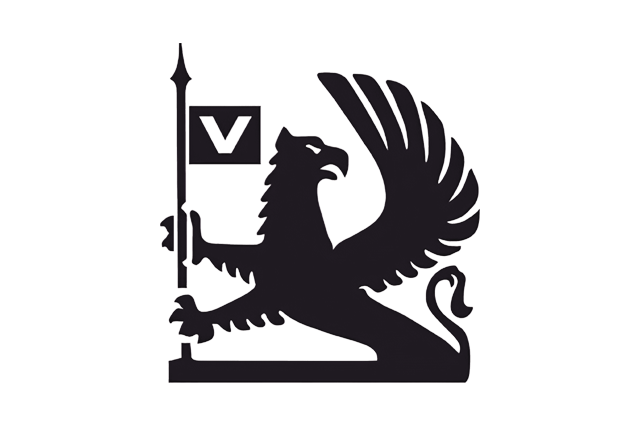
The griffin badge is older than the company by roughly six centuries. Falkes de Bréauté, a mercenary in the service of King John, acquired a house on the south bank of the Thames in the thirteenth century; "Fulk's Hall" eventually became Vauxhall, and his heraldic griffin was borrowed by the engineering works that later took the district's name. Vauxhall itself moved to Luton in 1905, so the badge now commemorates a place the company left 120 years ago.
Before General Motors bought it in 1925, Vauxhall was a sporting marque of real standing. Laurence Pomeroy's Prince Henry and the 30-98 that grew out of it were among the fastest British cars of the pre-1914 and immediate post-war years. GM turned it into a maker of sensible saloons and vans; PSA bought it in 2017; it is now a Stellantis brand selling rebadged Opels, with Luton and Ellesmere Port still on the map.
1862 — Opel: sewing machines, bicycles, then rockets
Adam Opel began building sewing machines in Rüsselsheim in 1862, in a converted cowshed. Sewing machines were the consumer technology story of the era — precision mechanisms, mass-produced, sold on credit to households — and Opel was good at it. Bicycles followed in 1886, and by the 1890s Opel was among the largest bicycle manufacturers in Europe.
Adam Opel died in 1895 without ever having shown much enthusiasm for the automobile. It was his widow Sophie and their five sons who bought out Friedrich Lutzmann's small carmaking operation in Dessau, producing the first Opel car in 1899 under the cumbersome name "Opel Patent Motor Car, System Lutzmann." It was not a success. A licence deal with Darracq of France carried the company through the early 1900s until Opel's own designs matured.
The strangest chapter came in 1928, when Fritz von Opel strapped solid-fuel rockets to a car and a glider. The RAK 2 ran at Berlin's AVUS track in front of a crowd, reportedly exceeding 200 km/h and generating enormous publicity for a company that was, at that moment, quietly negotiating its own sale. General Motors took 80% of Opel in 1929 and the rest in 1931, and held it for 86 years — through wartime seizure, post-war rebuilding under Allied control, the Kadett and Rekord years, and the long decline that ended with PSA buying it in 2017.
1895 — Škoda: two Václavs and a bicycle called Slavia
Václav Klement was a bookseller in Mladá Boleslav who wrote to the German manufacturer of his bicycle to complain about a fault. The reply, so the story goes, told him to write in German if he wanted an answer. He teamed up with the mechanic Václav Laurin instead, and in 1895 they began building their own bicycles under the name Slavia.
Motorcycles followed in 1899 and were remarkably successful in early European racing; the Voiturette A of 1905 was the firm's first car. Laurin & Klement grew into the largest vehicle manufacturer in Austria-Hungary, and after a disastrous factory fire in 1924 merged with the Škoda Works of Plzeň — an industrial giant that made everything from artillery to power stations. The winged arrow badge, introduced around 1926, belongs to that second, larger company rather than to the bicycle makers.
Škoda spent four decades as a Communist-era state enterprise turning out rear-engined saloons of steadily diminishing quality, then became the first big prize of post-1989 privatisation. Volkswagen took a stake in 1991 and full ownership by 2000, and the transformation that followed is one of the genuinely remarkable turnarounds in the industry.
1899 — the year the industry arrived
Three surviving marques were founded within months of each other in 1899, on three different continents' worth of ambition.
Renault. Louis Renault built his first Voiturette in a garden shed at Billancourt and, on Christmas Eve 1898, famously drove it up the steep Rue Lepic in Montmartre to win a bet and collect his first orders. The car's significance was mechanical: Renault's direct-drive top gear, patented in 1899, eliminated the chain drive and became the pattern for essentially every subsequent transmission. Société Renault Frères was formed in 1899 with his brothers Marcel and Fernand handling the business. Marcel was killed in the 1903 Paris–Madrid race, and Louis withdrew from competition driving.

Renault's darkest turn came in 1944, when Louis was arrested for collaboration; he died in custody, and the company was nationalised in 1945 as the Régie Nationale des Usines Renault. It stayed in state hands until the 1990s, which is why the diamond badge sat on so many determinedly unpretentious French cars for so long.
Fiat. Fabbrica Italiana Automobili Torino was registered in July 1899 by a syndicate of Turin aristocrats and investors, among them a cavalry officer named Giovanni Agnelli who would come to dominate it and whose family still controls the successor group. The first car, the 3½ HP, was a rear-engined two-seater built in small numbers.
Fiat's genius was scale. The Lingotto plant that opened in the early 1920s, with its rooftop test track and its production line running vertically from ground floor to roof, was the most advanced factory in Europe. By mid-century Fiat was not merely Italy's carmaker but a substantial part of the Italian economy.
Buick. David Dunbar Buick was a Scottish-born Detroit plumbing manufacturer who had made money from a process for bonding porcelain enamel to cast iron — which is to say, the modern white bathtub. He was far more interested in engines, and the company that bore his name from 1903 pioneered the valve-in-head (overhead valve) engine that gave it a lasting power advantage over the flathead competition.
Buick himself was hopeless with money and was effectively pushed out by William C. Durant, the carriage magnate who took over in 1904, made Buick the best-selling car in America, and then used it as the foundation stone of General Motors in 1908. Buick has been GM's second-oldest surviving division ever since — and, in an irony nobody in 1908 could have imagined, its survival now depends heavily on its enormous popularity in China.
1902–1913 — Detroit, Coventry and the sports cars
Cadillac (1902) was assembled from the wreckage of the Henry Ford Company after Ford stormed out. The investors called in Henry Leland, a machinist trained in the New England arms industry, to value the plant for liquidation; Leland told them to build cars instead, using the engine he had designed. Precision was Leland's religion, and Cadillac's most famous demonstration of it came in 1908, when three cars were dismantled at Brooklands, their parts jumbled together with spares, and reassembled into three running cars. That won the Dewar Trophy and the slogan "Standard of the World." Cadillac won it again in 1912 for adopting Charles Kettering's electric self-starter — the innovation that made cars usable by anyone who could not swing a crank handle.
Ford (1903) was Henry Ford's third attempt at a car company and the one that worked. The Model T arrived in 1908; the moving assembly line at Highland Park in 1913 cut chassis assembly time from over twelve hours to around ninety minutes; the five-dollar day of 1914 turned the workforce into customers. No other manufacturer on this list changed the world quite so comprehensively in quite so few years.
Rolls-Royce (1904) began with a lunch. Henry Royce, a Manchester electrical engineer, had built three small cars because he was dissatisfied with the Decauville he owned. Charles Rolls, an aristocratic motor dealer and pioneer aviator, was introduced to him at the Midland Hotel in Manchester on 4 May 1904, and agreed to sell everything Royce could build. Rolls-Royce Limited was incorporated in 1906; the 40/50 hp — the Silver Ghost — established the reputation for silence and durability that the name has traded on ever since. Rolls died in a flying accident in 1910, the first Briton killed in a powered aeroplane.
Rolls-Royce is where the continuity question gets genuinely messy. The parent company collapsed into receivership in 1971 over the cost of the RB211 aero engine and was nationalised; the car division was split off and sold separately in 1973. In 1998 Volkswagen bought the Crewe factory and the Bentley name, while BMW — which already supplied engines — bought the rights to the Rolls-Royce name and badge from the aerospace company that still owned them. VW built the last Crewe Rolls-Royces until the end of 2002, and BMW opened Goodwood in 2003. The marque never quite stopped, but it changed hands, homes and owners in ways that make "continuous" a generous word.
Chevrolet (1911) was Durant's revenge. Ousted from GM in 1910, he founded a new company with the Swiss-born racing driver Louis Chevrolet, whose name carried more glamour than Durant's own. Chevrolet sold well enough that Durant was able to buy back control of General Motors with its stock in 1916 — one of the great reverse takeovers. Louis Chevrolet, meanwhile, fell out with Durant over the direction of the cars and sold his shares early, receiving almost nothing from the badge that carries his surname to this day.
Aston Martin (1913) was founded in London as Bamford & Martin, selling Singers and tuning them for competition. The name came from Aston Hill, a hillclimb near Aston Clinton in Buckinghamshire where Lionel Martin raced. The first car bearing the name appeared during the First World War. What followed is the most financially precarious history of any surviving marque — bankruptcy or near-bankruptcy roughly seven times, depending on how you count, with rescues by Bertelli, by David Brown in 1947 (whose initials still prefix the model names), by a consortium in the 1970s, by Ford from the late 1980s, and by various investor groups since the 2018 stock market listing.
1906–1919 — the Italians, the Bavarians and the herringbone
Lancia (1906). Vincenzo Lancia was Fiat's star test and racing driver when he set up on his own in Turin with Claudio Fogolin. He turned out to be one of the most inventive engineers of the century. The Lambda of 1922 introduced a load-bearing unitary body — arguably the first production monocoque — along with independent front suspension by sliding pillars and a narrow-angle V4. Lancia later gave the world the first production V6 in the Aurelia and, in the Fulvia, Stratos, 037 and Delta Integrale, one of the greatest rallying dynasties. Fiat absorbed it in 1969; after a long period reduced to a single model in a single market, the badge has begun expanding again with a new Ypsilon.
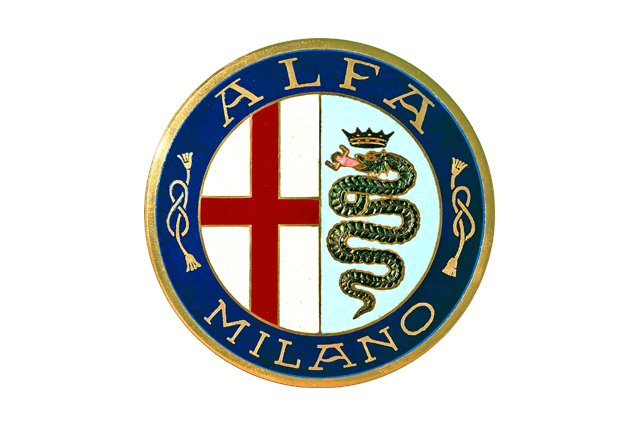
Alfa Romeo (1910). A.L.F.A. — Anonima Lombarda Fabbrica Automobili — was formed in Milan in June 1910 from the collapsing Italian arm of the French firm Darracq. Its badge is a piece of civic heraldry: the red cross of Milan alongside the biscione, the crowned serpent of the Visconti family, shown swallowing a human figure. The engineer Giuseppe Merosi designed the first cars. During the war the Neapolitan industrialist Nicola Romeo took control, and from 1920 the cars carried both names.
Alfa's inter-war record is extraordinary — Vittorio Jano's straight-eights, four Le Mans wins in a row, and a racing department run on the company's behalf by a former driver named Enzo Ferrari. State ownership under the IRI holding company followed, then Fiat in 1986.
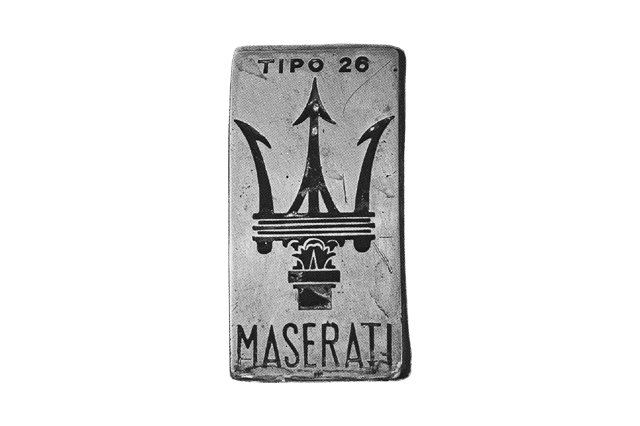
Maserati (1914). Officine Alfieri Maserati opened in Bologna on 1 December 1914. There were six brothers; five were engineers and racers, and the sixth, Mario, was a painter who gave the firm its trident, copied from the statue of Neptune in Bologna's Piazza Maggiore. The company spent its first decade preparing other people's racing cars before the Tipo 26 of 1926 carried the name itself.
The Orsi family bought the business in 1937 and moved it to Modena; the brothers served out their contracts and then left to found OSCA. Citroën owned Maserati from 1968 (which is why the Citroën SM has a Maserati V6), De Tomaso from 1975, and Fiat from 1993.
BMW (1916). BMW dates itself to 7 March 1916, though the entity founded that day was Bayerische Flugzeugwerke, an aircraft manufacturer; the name Bayerische Motoren Werke came from the reorganisation of Rapp Motorenwerke in 1917, and the two strands were brought together afterwards. Either way, BMW's origin is aviation. Its reputation was made by the IIIa aero engine, whose high-altitude carburettor let it hold power where rivals faded.
The Treaty of Versailles banned German aero engine production, so BMW went to motorcycles — the flat-twin, shaft-drive R32 of 1923 — and then to cars, starting in 1928 with a licence-built Austin Seven sold as the Dixi. The roundel is not a spinning propeller, whatever generations of advertising have implied; it is a roundel in the blue and white of the Bavarian state flag, and the propeller association comes from a company advertisement of the late 1920s that leaned into the resemblance.
Citroën (1919). André Citroën's fortune came from gears. On a trip to Poland he saw a double-helical, or herringbone, gear cut in wood; he acquired the rights, worked out how to cut it in steel, and built a business supplying quiet, strong gearing. Those inverted chevrons are the badge. During the war his Quai de Javel works mass-produced artillery shells, and in 1919 he converted the plant to cars, launching the Type A — the first mass-produced car in Europe.

Citroën was congenitally incapable of caution. The Traction Avant of 1934 combined unitary construction, front-wheel drive and independent torsion-bar suspension, and its development costs bankrupted the company; Michelin, the largest creditor, took control, and André Citroën died the following year. Michelin held the company until Peugeot took over in 1976.
Bentley (1919). W.O. Bentley and his brother had imported French DFP cars before the war and designed rotary aero engines during it. Bentley Motors was registered in January 1919, though the first customer 3 Litre took until 1921. The Le Mans wins of 1924 and 1927–1930, driven by the wealthy amateurs known as the Bentley Boys, made the name — but the company went into receivership in 1931 and was bought by Rolls-Royce, which spent the next six decades selling Bentleys as slightly sportier Rolls-Royces. Volkswagen's 1998 purchase of Crewe restored Bentley as a separate marque with its own engineering.
1883/1886 — Mercedes-Benz and the oldest lineage of all
Karl Benz founded Benz & Cie in Mannheim in October 1883, and on 29 January 1886 filed the patent — DRP 37435 — for a "vehicle powered by a gas engine." The Patent-Motorwagen was a three-wheeler with a single-cylinder four-stroke engine of under one horsepower, and it is as good a candidate for "the first automobile" as exists. In the same year, 60 miles away in Cannstatt, Gottlieb Daimler and Wilhelm Maybach fitted their high-speed petrol engine to a carriage. The two operations appear never to have met.

The name Mercedes belongs to neither founder. Emil Jellinek, an Austrian businessman and Daimler's most demanding customer, raced under the pseudonym "Mercedes" — his daughter's name — and in 1900 ordered a large batch of cars on condition that Maybach design something radically better and that it carry that name. The result, the Mercedes 35 PS of 1901, with its long wheelbase, low centre of gravity, honeycomb radiator and pressed-steel frame, is generally regarded as the first recognisably modern motor car.
Germany's post-war economic collapse forced the two rivals together: a co-operation agreement in 1924 and a full merger in 1926 created Daimler-Benz AG, selling cars as Mercedes-Benz. The badge combined Daimler's three-pointed star — land, sea and air — with the laurel wreath that Benz had used, which is why the modern star still sits inside a ring.
This is why Mercedes-Benz gets the lineage title. Every other company on this list was doing something else in 1886, or did not exist. Only this one can draw an unbroken corporate line from the patent that started the whole thing.
The scoreboard
| Brand | Company founded | First car | What it made first | Continuity notes |
|---|---|---|---|---|
| Peugeot | 1810 | 1889 (steam), 1890 (petrol) | Saw blades, coffee grinders, corset stays | Family involvement unbroken; now Stellantis |
| Tatra | 1850 | 1897 | Horse-drawn carriages | No cars since 1999; trucks only |
| Vauxhall | 1857 | 1903 | Marine and pumping engines | GM 1925–2017, now Stellantis |
| Opel | 1862 | 1899 | Sewing machines, then bicycles | GM 1929–2017, now Stellantis |
| Škoda | 1895 | 1905 | Bicycles (as Laurin & Klement) | Name from 1925 merger; VW since 1991 |
| Renault | 1899 | 1898 | Cars from the start | Nationalised 1945–1990s |
| Fiat | 1899 | 1899 | Cars from the start | Agnelli family control throughout |
| Buick | 1899/1903 | 1904 | Plumbing fittings, enamelled baths | GM division since 1908 |
| Cadillac | 1902 | 1902 | Cars from the start | GM division since 1909 |
| Ford | 1903 | 1903 | Cars from the start | Family voting control retained |
| Rolls-Royce | 1904/1906 | 1904 | Cars from the start | Name and factory separated in 1998 |
| Lancia | 1906 | 1907 | Cars from the start | Fiat since 1969 |
| Alfa Romeo | 1910 | 1910 | Cars from the start | Successor to Darracq Italiana |
| Chevrolet | 1911 | 1912 | Cars from the start | GM since 1918 |
| Aston Martin | 1913 | 1915 | Selling and tuning Singers | Repeated insolvencies |
| Maserati | 1914 | 1926 | Racing car preparation, spark plugs | Owned by Citroën, De Tomaso, Fiat in turn |
| BMW | 1916/1917 | 1928 | Aircraft engines | Motorcycles from 1923 |
| Citroën | 1919 | 1919 | Double-helical gears | Michelin control 1935–1976 |
| Bentley | 1919 | 1921 | Aero engines (W.O. Bentley) | Rolls-Royce 1931–1998, VW since |
| Mercedes-Benz | 1883 (Benz & Cie) | 1886 | Stationary gas engines | Merged with Daimler 1926 |
The ones that fail the test
Several famous old names get quoted in these lists and shouldn't be. Bugatti was founded in 1909, which would place it high up, but Ettore Bugatti's company effectively died in the 1950s; the name was revived by Romano Artioli in 1987 for the EB110, went bankrupt again, and was revived once more by Volkswagen in 1998. Three separate companies have used the badge. Lagonda (1906), Hispano-Suiza (1904), Delage (1905) and Isotta Fraschini (1900) all have older founding dates than half this list and all have gaps of decades. Duesenberg and Talbot exist only as trademarks.
The distinction matters because a revived badge buys nothing but the name. When production stops, the tooling is scrapped, the engineers scatter and the supplier relationships dissolve. What Peugeot and Fiat and Ford have is not a logo but an unbroken institutional memory — people who learned the job from people who learned it from people who were there.
The oldest motorcycle brands
Two-wheelers have their own contest, and it produces a different answer.
Peugeot Motocycles claims 1898, when the parent company produced its first motorised two-wheeler, and it has been separated from the car business for decades — it now builds scooters, with the majority stake held outside the Peugeot group. On founding date alone it is the oldest motorcycle marque in the world.
Royal Enfield (1901) is the one usually credited as the oldest motorcycle brand in continuous production. Its predecessor in Redditch made sewing needles before it made bicycles, and the "Made Like a Gun" slogan comes from a contract to supply parts to the Royal Small Arms Factory at Enfield. The Bullet name dates from 1932 and has never gone away — largely because the tooling was shipped to Madras in 1955 to build machines for the Indian Army, and Indian production simply carried on after Redditch closed around 1970. Under Eicher Motors, Royal Enfield now sells more mid-capacity motorcycles than anyone in the world.
Triumph (1902) is the cautionary tale. Siegfried Bettmann began importing bicycles in 1885 and founded the Triumph Cycle Company in Coventry the following year; the first Triumph motorcycle appeared in 1902. Speed Twin, Thunderbird, Bonneville — and then the Meriden workers' co-operative collapsed in 1983 and the name stopped. John Bloor bought the rights out of the wreckage, spent years building a new factory at Hinckley, and restarted production in 1991. It is a genuinely great motorcycle company, but the clock was reset.
Harley-Davidson (1903) began in a wooden shed in Milwaukee, roughly 10 by 15 feet, where William Harley and Arthur Davidson built a motorised bicycle and then a proper motorcycle with a larger engine and a loop frame. The company nearly died twice — once in the Depression, once under AMF ownership in the 1970s, from which management bought it back in 1981.
Husqvarna (1903) technically outranks all of them: the Swedish factory at Huskvarna dates to 1689 and made muskets for the Crown before it made sewing machines, bicycles and, from 1903, motorcycles. But the motorcycle business was sold to Cagiva in 1987, passed to BMW in 2007 and to the KTM group in 2013, while the Husqvarna name on chainsaws and mowers went a different way entirely. It is the oldest name here and one of the least continuous businesses.
The oldest rubber: tyre brands that predate the car
The tyre makers quietly beat the carmakers, because rubber had industrial uses long before anyone needed a pneumatic tyre.
Semperit traces to a rubber works founded in 1824 near Vienna, making waterproofed fabric and rubber goods decades before the automobile; the Semperit name — from semper it, "it always goes" — came much later, and the brand has belonged to Continental since the mid-1980s. Continental (1871) was founded in Hannover as a maker of rubberised fabric and solid tyres for carriages, and was the first German company to make pneumatic bicycle tyres. Pirelli (1872) started as Giovanni Battista Pirelli's rubber works in Milan and made its early money in submarine telegraph cables, moving to bicycle tyres around 1890 and car tyres shortly after 1900.

Michelin (1889) was formally founded that year by André and Édouard Michelin, though the family rubber business in Clermont-Ferrand goes back to the 1830s. Its breakthrough was the detachable pneumatic tyre, patented in 1891 — previous pneumatics were glued to the rim and took hours to repair. Michelin proved the point by backing Charles Terront in the 1891 Paris–Brest–Paris cycle race, then by entering a car called L'Éclair on pneumatic tyres in the 1895 Paris–Bordeaux–Paris. Bibendum, the man made of tyres, appeared in 1898, and the first Michelin guide, given away free to encourage motoring, in 1900.
Goodyear (1898) is the odd one out: Frank Seiberling founded it in Akron with borrowed money and named it after Charles Goodyear, who had discovered vulcanisation in 1839, died in poverty in 1860, and had no connection whatsoever with the company that made his surname famous.
What the survivors have in common
Look across the list and the pattern is not brilliance. Plenty of brilliant carmakers died — Duesenberg, Bugatti in its original form, Facel Vega, Panhard, the whole British motorcycle industry.
What the survivors share is one of three things. Some had something else to sell when cars went badly: Peugeot's tools, Škoda's industrial works, BMW's motorcycles, Fiat's trucks and aero engines. Some had a family or a state that refused to let go: the Agnellis, the Fords, the French government's forty-five years of Renault, the Czech state's stewardship of Škoda. And some had a badge worth more than the company, which meant that when the business failed, somebody bought the name rather than letting it die — Aston Martin's seven lives, Bentley's absorption by a rival, Rolls-Royce's separation of factory from trademark.
Peugeot, uniquely, has had all three, which is why the lion has now been on the market for 216 years and counting.
Go and look at the badges properly
Next time you are in a car park, find the oldest marques and read their badges as documents rather than decoration. The Vauxhall griffin belongs to a thirteenth-century mercenary. The Alfa serpent is a medieval Milanese dynasty's boast. The Citroën chevrons are the tooth profile of a gear. The Škoda arrow started life on artillery. Peugeot's lion was hired to sell saw blades.
None of these were designed to sell cars. They were inherited by car companies from whatever those companies used to be — and the fact that we now read them as automotive is the clearest possible measure of how completely the motor car swallowed the industries that produced it.


